I’m Not Like Other Guys

Michael Jackson’s Thriller (1983)

What’s the first thing your mind conjures when Hallowe’en creeps around the autumnal corner? For me it’s either the song “Thriller,” or the iconic imagery from its 1983 companion promo. Despite Jacko’s Jesus juice-addled, baby-dangling plummet from grace, it remains the undisputed, greatest music video of all time, with no real contenders or pretenders to the throne. Yeah, it veers more into zombie territory, but it also arguably depicts one of the three, top-tier werewolf transformations of all-time, and certainly one of the most well known in pop culture. Iconic doesn’t even scratch the surface—record sales, the Thriller album cover, the audience views on MTV were through the roof. It’s a clear example of music and visuals interlocking so inseperably, and the art and the iconography being so momentous, that we can almost turn a blind eye to MJ’s alleged atrocities—for the 14-minute duration anyway.

Thriller is a cornucopia of horror; a mashup packed with shout-outs to the hounds of hell, zombies, werewolves—or perhaps cat people, corpses, a haunted house, and showcases an alarming, foam rubber shapeshift—the werewolf, or arguably werecat here. It’s fairly feline, with prominent, extending whiskers, and memorably shows Michael in cat-like, yellow contact lenses. We’ve got spooky, mist-engulfed graveyards, cars breaking down, a grave emergence, Fred Astaire-inspired choreography, the sinister tones of Vincent Price, and a bassline that makes you wanna freaky deaky, right? Also, it boasts American Werewolf’s key crew of John Landis—who also made “Black or White” for MJ in 1991, cinematographer Robert Paynter, and Rick Baker’s special effects, which lead on perfectly from the previous picture. Stuff to spot for the sticklers and geeks—several makeup appliances were taken from American Werewolf and repurposed for the “Thriller” video, including the clawed hand appliance that extends over the porno cinema chair, which was reused on Jackson himself.

Say what you will about certified kook, Michael Jackson, and the controversy surrounding the bloke, but the magnitude of Thriller is undeniable, and the perfect example of an artist’s work transcending their problematic persona. If Jacko freaks you out, so be it! It’s Hallowe’en. What other night of the year would be more appropriate to be psychologically perturbed by the presence of Mike in your living room? All those disturbing claims and events aside, talk about commitment to the bit. Whatever you think of him, the devotion to the music, dedication to the video, the uncomfortable makeup appliances, and the art of it all is incontestable. It will endure; live, and last forever. Codswallop about a mere two nose jobs aside, MJ had a chilling physical transformation of his own—the vitiligo skin tone shift, an evident slew of surgeries—everything became altered as his career progressed, or perhaps deteriorated. Factor in the accusations during his life, and the damning Leaving Neverland revelations after his death, one could argue Michael became monstrous himself. I’d refer you to my piece on Captain EO and Moonwalker for an extended take on the nightmarish, poptastic clout of Jackson.

Beware the Moon, Lads

An American Werewolf in London (1981)

I recall being disturbed by the menacing and intimidating VHS cover of An American Werewolf in London in my local video shop, Cav’s. That black box with understated purple text and blood-red 18 certificate, and a monster resembling greasy kebab meat. So much so, that I never reached for the top shelf, or plucked up the guts to audaciously point it out to my mum as a potentially sensible rental. For as long as a decade or so after that, I’d only seen its wildly-inferior, shockingly shite, 1997 sequel, An American Werewolf in Paris.

It wasn’t until 2007, prepping my MA graduation short, The Wilds, that my head of year, Nick Wright, suggested I seek out the Landis original as both films dealt with cryptid attacks in Northern England, and American Werewolf was clearly his go-to genre reference. My ten-minute short had absolutely nothing in the way of humour—although the Farmer protagonist wisecracking “Nine lives, my arse” like John McClane or Arnie might’ve let slip, was jokingly considered as a daft quip. However, I did pinch American Werewolf‘s painterly, neatly-composed opening establishing shots, but little else, as we were armed only with a dummy panther tail, and drastically under-crewed and underfunded for an ambitious creature effort—we did, however, shoot an actual deceased black calf from an abattoir with a 12 bore shotgun at 70fps hoping it would look acceptable. What I would’ve given for a panther-headed rug we could’ve turned into a rudimentary, hand-puppeted, big cat noggin for close-ups. My ace cinematographer, Adam Conlon, and I even momentarily contemplated the title, Blood of an Englishman—a direct quote from American Werewolf.

A handful of American Werewolf’s actors were treading the boards in Nicholas Nickleby at the time, and Landis judiciously plucked them from our revered Royal Shakespeare Company. You’ve also got the godlike genius, Rick Mayall, in an early, subdued role, and the preeminent cinematic Yorkshireman, Kes’s P.E. teacher, Brian Glover, at the same table, playing chess in the pub, and we wonder if that’s where the pair first became friends. Perhaps that’s the explanation for Glover’s madcap appearance as Richie and Eddie’s irate neighbour, Mr Rottweiler, in one of my favourite Bottom episodes, “Gas.”

The locals gawk at the two young yanks as they barge into the Slaughtered Lamb and eyeball them as if they’re from another world. They’re made to look like—and may as well be astronauts to these village folk in this classic, western saloon gag. The premise is somewhat of an echo of an early experience for Landis on the Kelly’s Heroes set where the upstart was working in an early role and experienced a Gypsy funeral and its unorthodox burial, which was superstitiously conducted to ensure a violent criminal’s corpse wouldn’t subsequently rise from its grave and cause further havoc. American Werewolf plays on an incredulous belief in legend, hokum, and claptrap, but muddles it with the smart, horror picture conceit that it all turns out to be shockingly true, and these smug, educated, seemingly advanced Americans fall foul of powers and supernatural workings they can never fully believe in or understand.

1981 ushered in more practical, modern day werewolf tales, and introduced agonising mutations featuring distinctly lupine beasts—all gnashers and noses; hulking and monstrous. Transformationally-speaking, American Werewolf is the absolute pinnacle. Not even Rob Bottin’s real-time Howling shapeshift can compete with David’s agonised “burning up” transformation. The sudden, painful pang that strikes as he first begins to morph, followed by the terrifying, stretchy snout, and malleable-footed freak show in Jenny Agguter’s flat, that still churns the stomach almost 45 years later. At one point, David disturbingly reaches out to the camera lens as if he wants us; the audience to help him, but we’re powerless.

I definitely didn’t fall in love with American Werewolf instantly, and I must confess to finding the film clunky and clumsy in parts. I’m also not completely taken in by John Landis. The Twilight Zone tragedy and its weighty blame aside, I don’t believe I’d like to spend any time in his company. Having dinner with that bloke would be a real chore. Landis has an obnoxious, odious manner in interviews that I frequently find repellent. The “non-stop orgy” of the See You Next Wednesday segment heralds a revealingly sleazy tone born of the lascivious Landis just wanting Brenda Bristols to get her jugs out. He seems proud to be an arse. Landis has such an irksome, abrasive personality, and a crude, unfinished directing style that lacks subtlety. However, for a movie like American Werewolf, perhaps that’s precisely what was required.

Early Eighties London seems so seedy, with jazz mags at newspaper stands, and adult cinemas adorning Piccadilly Circus. I do enjoy the peculiar interactions in the porno theatre. It’s unorthodox, funny, and dark, with the prolonged carnal moaning in the background juxtaposed throughout. The chirpy and courteous, yet fiendishly undead “Hello” couple basically invent Edgar Wright, and give birth to Shaun o the Dead’s entire comedic/horrific aesthetic with a single line of exquisitely delivered dialogue, and the three homeless fellas—Alf, Ted, and Joseph glint in the shadows of the cinema as they’re creepily cajoling David into topping himself. If you’re attuned to the cadence, “You must take your own life” even has audible shades of Shaun‘s Peter Serafinowicz.

Buses are spinning, drivers are in car crashes—getting hurled through their windscreens, and run over, lying bloody on the floor. Frantic pedestrians can only watch helplessly as Hieronymus Bosch chaos ensues. The wolf is loose—nipping at bystanders’ ankles. That head copper takes one in the jugular, and gets his head bitten off. It’s basically bumper cars in Leicester Square with a mad dog dashing about. It’s astonishing how little we glimpse the creature when it’s all broken down. We probably see more of the shark in Jaws, and that’s one of the reasons American Werewolf is still so effective. It’s not that you couldn’t do it now, it’s that there’s no restraint anymore. In a time where computer geekery can arguably accomplish anything, filmmakers opt to show everything. They can, so they do. They show their workings, and eliminate all mystique.

Like Roger Corman once said, “When the monster is dead, the movie is officially over.” American Werewolf’s wrap-up has little consideration for the audience. Granted, Agutter’s reaction is moving, and we feel for the gunned-down David, and accept the foregone conclusion of his werewolfery, but it feels like a disturbed double-decker with no brakes careering into a shopfront. American Werewolf’s clipped conclusion leaves viewers with a peculiar, unsorted feeling hanging in the air, and that’s partly why it’s my penultimate pick, as opposed to the final entry. Ebert didn’t jive with how sudden Landis rolled his credits, and although I concede certain crowds prefer a softener, they, along with a chunk of critics, often mistake a blunt wrap up for a film devoid of professionalism. Tell that to Cronenberg’s The Fly, or the downbeat, sobering climax of Easy Rider, or the rapid, hard cut of Tobe Hooper’s original Texas Chain Saw Massacre.

A potentially profound video essay by Jon Spira on the Arrow 4K disc argues American Werewolfmay hold a covert meaning. In Germany, the wolf is a brawny, indigenous, loyal protector as well as the name of a racist paramilitary group. The name “Adolf” means “noble wolf,” and Hitler would even refer to himself as such. His military headquarters in East Prussia was named, “The Wolf Lair.” The “Radio Werewolf” station was utilised by Nazi propaganda minister, Goebbels. “Wolf packs” were encouraged to hunt down enemies of the state. Curt Siodmak had been a successful novelist in Germany, and used The Wolf Man as a literary vehicle to explore his own wartime demons—where ordinarily decent men were turned into murderous animals. Siodmak laid out the werewolf lore that would follow for decades to come, and is cited and mimicked to this day. Many of Curt’s rules didn’t stem from folklore, he created them. Infectious bites, silver bullets, and tellingly, the pentagram forseen in the palm of a victim’s hand—those marked for death in Nazi Germany were forced to wear five-pointed yellow stars.

It’s worth wondering, is Landis wielding this loaded imagery, subtext, and historic context of the wolf to present a hairy, antisemitic Jewish allegory? David is a man in a country that doesn’t seem to want him, and drifts, disturbed by the murder of his best friend. The cheeky nurse’s subtle but perceptible, Eighties intolerance as she blurts out, “I think he’s a Jew” still lands palpably, suggesting some kind of surreptitious subterfuge. Is it an impudent throwaway (literally) foreskin quip, or an authorial hint at the public’s suspicion of the unrecognisably foreign—as sneaky wolves in sheep’s clothing?

Halloween Party

Night of the Demons (1988)

Right. It’s unquestionably time to put the brood to bed, and anyone squeamish, or overly concerned about nudity can step out now, too. From Kevin Tenney, director of Witchboard, comes, “a slasher film with no slasher.” Don’t scoff any razorblade apples, whatever you do, because we’re entering the closet belonging to our acid-head mother for a movie I wasn’t familiar with until researching this saga—1988’s Night of the Demons. This film had its original title of Halloween Party blocked by the Michael Myers Halloween franchise overlord—Syrian-American movie mogul, Moustapha Akkad, who threatened a spoilsport lawsuit for infringing on his beloved cash cow.

This one is set on Hallowe’en night, so that’s a promising start. The opening shot of Night of the Demons is rock ‘n’ roll blaring from a teenagers’ car somewhere in the suburbs, with a pumpkin stuck on their roof, and a fat bloke half-arsedly dressed as a pig, calling his female friend a bitch and yelling, “Happy Halloween… asshole!” at a curmudgeonly pensioner. That paints a pretty accurate picture of what will follow. The adolescents sack off their lame-o high school dance in favor of bohemian misfit, Angela’s gothic gathering at Hull House—a now abandoned crematorium by the cemetery where the funeral parlor owners just happened to go full maniac at Hallowe’en years before. As the teen bozos party into the night, Angela’s sexy séance transforms the snarky dudes, and dudesses into hideous demonic creatures of the night, who begin to kill and devour one another.

As her crude, wisecracking little brother, Billy would put it—nice gal Alice in Wonderland with the “bodacious boobies” or “big cha-chas,” Judy is our prudent female lead. In addition to this “pretty little piece,” the malleable-mouthed, lipstick boob artist and doll faced, Suzanne is played with saucy relish by an arse-out Linnea Quigley (Nightmare Sisters, Savage Streets, the aerobic spoof, Linnea Quigley’s Horror Workout, Assault of the Party Nerds 2: The Heavy Petting Detective, Girls Gone Dead) who—Meet Me Halfway bonus edition—is introduced to us properly bent over, perusing Tide detergents with a full screen upskirt of her pink-pantied posterior. Which is how she spends the majority of the movie, actually—flashing anything and everything, front and back, in a frilly pink dress—distracting convenience store employees whilst Angela robs booze and snacks.

Linnea quite confidently owns this role, yet in spite of Night of the Demons only being 3 years later, she doesn’t hit the mindbogglingly bewitching physical heights of the equally nudie, Return of the Living Dead. A stand out gross out moment for her is when future Quigley beau and special-effects dude, Steve Johnson’s effects (Ghostbusters, Fright Night, Dead Heat, A Nightmare on Elm Street 4: The Dream Master) aid her inexplicably, but quite seamlessly with a Cronenbergian body horror technique, as Suzanne stuffs her lipstick inside an invisible nipple cavity.

Night of the Demons feels kind of porno-sleazy; a bit naughty, and the gore is legitimately repulsive at times. It revolves around perversion, and screwy characters who just want to fool around. They talk about cute boys, and the bros are awful to the chicks, with a plethora of insults and awful behavior—especially the fat, John Belushi-aping, pig-man slob, Stooge—whose abusive language eventually meets its match with Angela‘s tongue-gobbling, feminist revenge. But even the so-called nice guys like Jay, whose jock head is turned at the slightest attractive female presence, leaps at the chance to ditch his date, Judy.

Then there’s the pirate, Alvin Alexis as the not so jolly Rodger—with his (almost) perpetually, glum expression—breaking new ground as perhaps the first African American slasher secondary to live through to the completion of a horror film (don’t check that, it’s likely spurious). Although, I did discover a few comments from people of colour appreciating that Rodger made it to the end—albeit as the result of cowardly, sensible decisions and logical, rational choices, bordering on scaredy-cat tactics—such as spending a chunk of the film hiding in a car. Rodger really represents the audience here as he’s arguably one of the only likable characters.

Night of the Demons racks up the nudity, and the fake-out jump scares with a multitude of boos, woo-hoos, and ooga-boogas. There’s skulls and sarcasm, wrong turns, low-lying mist, pratfalls and pranks, candelabras, strategically placed pumpkins, and characters in costume—Max and Frannie as a doctor and, I assume, his patient, brewskis, dirt bags hiding in coffins, doors slamming of their own volition, broken down cars, and broken mirrors—speaking of which, the Pat Benatar Best Shot Award goes to the bit that cleverly captures and neatly frames our entire ensemble, if you will, in the shattered shards of glass, framing everyone perfectly. Technically speaking, it’s a marvellous composition. Along with the Beetlejuice-esque finger-candles gag, and wild contra-zooms, Evil Dead fans will instantly clock the demon force POV—although clearly a rip-off, it’s homaged stylishly with shameless bravado. Night of the Demons‘ dynamic, mobile camera feels firmly in the vein of Raimi—as is the spurting eye-gouge, and over the top, Kewpie doll makeup, which is seemingly pinched from Linda in the 1981 original.

This pick comes with caveats—the score is cacophonous and a bit maddening with its naff, intermittent keyboard stings—honestly, there’s a fraction too much snarling and gurgling in dimly lit hallways, but perfectly executed camera moves like the 90° rotation during the mortuary make out between Judy and Jay, the 360° Angela and Stooge smooch, plus the harsh barbed wire wall climb, which is cringily visceral, and in contrast to the bloody theatrics of what has come before, actually gets under your skin. The motion control, double exposure-showcasing title sequence is also certainly a visual highlight, but it’s unquestionably Angela’s provocatively-possessed, cheeky full moon-flashing, “Stigmata Martyr” spinning and twirling fireside waltz that really takes the cake. Her Cleo Rocos-esque, bendy grind n’ crawl, and strobed strut in fingerless gloves—arched almost supernaturally in black lingerie, marks Night of the Demons‘ second exposed derrière, and much like movies such as Vamp, or From Dusk Till Dawn, it’s a strategically-placed, seductive segue, which serves to transition audiences into the gory second half of the picture.

Nothing But a Doodle

Evil Toons (1992)

The midnight hour is upon us! First, they undress you, then they possess you. It’s time to turn in, or turn on! I may be a total creep for picking it, but this sleazy slot belongs to Fred Olen Ray’s Evil Toons—the dumbest, shortest, sleaziest horror I could exhume from my psyche. My rationale was, you’re probably feeling a bit silly by now—your brain is almost certainly kaput, you’re probably sloshed, cream-crackered, or just plain sick of horror movies. So send the weans to bed, and all sane-minded or sober companions home. The stage is set for Evil Toons—a lowbrow, spoofy send-up of haunted house films with one seemingly original conceit—human-on-drawing commingling. This particular kink went public in the weighty commercial wake of Cool World, Space Jam, and most notably, 1988’s tantalising Who Framed Roger Rabbit. Olen Ray leapt on the bandwagon, and chucked a pervy, animated wolf that’s on screen for a mere one minute and 30 seconds into his campy slasher. And yes, there’s just the one titular “evil toon”—rendering the title itself a bald-faced lie. The composite photography, animation, and rotoscoping isn’t half bad—there’s just barely any of it.

Made for the HBO/Showtime market before the scream queen movie bubble popped with 1995’s Witch Academy, and shot simultaneously with/overlapping Olen Ray’s Spirits from 1990, Evil Toons was purportedly shot in just eight days for $140,000. I thought Night of the Demons was my proud, new trashy discovery, but this takes the cheese biscuit—a spooky, erotic, fantasy horror-comedy with a murderous hell house softcore porno plot. From the director behind Hollywood ChainSaw Hookers, Scream Queen Hot Tub Party, Attack of the 60-Foot Centerfold, Bikini Frankenstein, and Harlots of the Caribbean: Dead Girl’s Chest. I’m uncertain how many of those are “legit” films, and how many are merely softcore porn. Here, Gary Graver’s Halloweeny photography occasionally pops, Sherman Scott’s (actually writer/director Fred Olen Ray’s pseudonym, as he didn’t like seeing his name appear too many times in the credits) dumb as a rock—yet admittedly self-aware screenplay leaves an awful lot to be desired, and Chuck Serino’s music peculiarly seems to play at wrong, inopportune moments. Inexplicably, monotonous score music drones over what would’ve otherwise been fairly effective jump scares. It’s almost as if they rushed this through post-production! Of course, when the tit-mad Olen Ray does miraculously carve out a moment of suspense, the telltale, soon-to-be animated wolf effects shots have decreased in quality to such a massive degree, that the moment is robbed of any real tension or unease—we instantly twig that the monster is about to pop out.

You won’t be shocked to hear there’s nothing particularly clever going on—ever, but Evil Toons does have the retro, clunky charm of a scene from the video game Night Trap, or the gentler aspects of countless slashers of the day. The acting resembles an average episode of Baywatch, and is about as intellectually challenging. It’s about as scary as Scooby Doo, with hokey horror tropes such as exaggerated, hysterical screaming, constant thunderstorms, Mr Hinchlow’s lame jump scare, terminal hickeys, bloody nighties, demonic shape-shifting, ancient incantations, and kissing Beelzebub’s butt. However, it’s acutely genre-referential in a tongue-in-cheek fashion, and self-aware to the point where the gals actually reference it directly. For example, there are pre-Scream, genre-savvy lines like, “It’s a dark, stormy night and we’re four young, attractive girls in a big, spooky house all alone. If we don’t go downstairs one at a time, how will we ever get bumped off without the others knowing about it?” and “How come every time you stay in an old, spooky house it has to lightning and thunder?”

Burt, played by the eternally-welcome Dick Miller (The Terminator, Gremlins)—who, hilariously for some reason, doesn’t know what a contortionist is—arrives in a white van creeper-mobile, resembling something Buffalo Bill might pop to Sofology® in, but chock full of hot, consenting coeds—these sorority chicks are set to score 100 bucks a piece if they can clean the house, stay overnight, and get picked up the next day with a spick and span home ready for the new owners to occupy. Burt calls these lasses “kids,” but if I’m generous, the youngest among them probably looks around 28, and as for the eldest—plucky, maternal cougar, team leader, and Olen Ray squeeze, Suzanne Ager (Inner Sanctum, The Bikini Carwash Company, and Buford’s Beach Bunnies) as Terry, could, in all honesty, pass for mid-to-late 40s—or older, depending on the camera angle and lighting. Of course, you’d never suspect it from the director’s male gazey, caboose-showcasing, reverse angle of her bent over backside as all the ladies’ arced, lined-up rears are boldly pointed skyward whilst retrieving cleaning products from Burt’s van.

All is going well with our motley crew of porno actresses and low-end scream queens until creepy bloke, David Carradine (Kung-Fu, Bound for Glory, Kill Bill) delivers a book with a face on it—a Kandarian warlock’s demon spells from late 17th century England, brought to America by Gideon Fisk in the early 1930s, and the pesky source of all the problems plaguing the house. Another 40-year-old college “kid,” Biff Bullock isn’t the only thing that’s turning up around midnight—expect some hair-raising company, and a bit of soul eating, as it captures fresh souls to go to hell (providing they’re tangy, but not too tart).

Alongside bird-woman, Terry, is the shy, smart girl, and “little miss egghead,” Megan—our bespectacled, sweatpants-adorned, preposterously well-endowed, virginial yet self-admiring redhead lead, played by 1982 Penthouse Pet, Monique Gabrilelle (Emmanuelle 5, Amazon Women on the Moon, Deathstalker II, Silk 2, and maybe most memorably to some, Bachelor Party—yeah, she’s that girl in the bedroom with Tom Hanks). A most diverting game to play during Evil Toons is closely watching Megan’s screams to detect if she’s actually stifling laughter—which is a lot of the time. Oddly, I didn’t mind at all, because it just shows how much of a laugh they’re all having making this daft movie. Gabrielle‘s ponytail even stands erect at one point to illustrate her petrified terror. In a film such as this, why there is no payoff for Megan’s apparent carnal cravings to be a promiscuous, sexually-liberated young woman is anybody’s guess. Perhaps the chaste must live on in horror—but that being said, everyone does anyway in this preposterously-plotted picture.

Adult film actress, Madison Stone is arguably the star—she’s on the video box cover, and makes for an interesting Google if you don’t mind clearing your history afterwards. Madison plays the raven-haired, spandex-clad, Roxanne—a Kathleen Hanna-esque, Pamela Adlon-y, sorta Shannon Doherty-alike, whose klutzy shenanigans—including bizarrely alluring, ditzy yet determined wine bottle opening techniques that inevitably result in upended legs, and whose striptease twerking pulled the football captain, made her a firm favourite—just don’t ask what she’s doing with that butter. The possessed incarnation of Roxanne is incapable of pouncing on and devouring any of her gal pals without first ripping their tops open to expose their chests, before gnawing at their throats—classic deployment of the jugs before jugulars rule. Jan may struggle to eat sandwiches, but still, the early ‘90s feathered hairdo’d blondie, Stacy Nix, is another fave, and is—prepare to go incognito, trivia fans, also a porn actress, subsequently renamed, “Barbara Dare.”

As much as an enlightened, modern gent can get a kick out of the audacious, abundant T and A on display here, I’m not sure I could’ve justified picking Evil Toons without the sheer movie presence of the male supporting cast—namely the aforementioned Dick Miller, and David Carradine. Kill Bill Carradine turns up looking like a cross between a dirty Doc Brown, and the 1990s incarnation of WWF superstar, The Undertaker. In a bit of future Bangkok, fishnet-wearing, bondage in a closet foreshadowing, Carradine—who filmed for perhaps a day or two, but is peppered throughout the entire movie, hangs himself in the opening moments *insert sadomasochistic, auto-erotic asphyxiation joke here.* The ham and cheese-flavoured Carradine plays Gideon Fisk—lurking and loitering aimlessly, clutching pretty much the exact Necronomicon—the smirking, human flesh-bound book from The Evil Dead—if it was sold on Wish.

There’s a commendably meta moment where “that guy” Dick Miller is watching himself lose his cat in 1959’s horror/comedy, A Bucket of Blood—no doubt because it’s public domain, whilst smoking one of his trademark cigars. Before his inexplicably attractive girlfriend—the lingerie-clad scream queen, Michelle Bauer (Café Flesh, Tied & Tickled, Night of the Living Babes, Sorority Babes in the Slimeball Bowl-O-Rama, and Assault of the Party Nerds Part 2: Heavy Petting Detective—I could go on) cameo helps sell a half-decent sex toy jackhammer gag. I’d watch Dick do almost anything—even read the Transylvania yellow pages, but the scene here, in which he is fellated by a fanged Roxanne, and caterwauls, “Oh boy, oh boy, oh boy… oh my Gooood!” hilariously like he’s in a pervy pantomime, really pushed that rule to its limit. I’m lying—it’s probably the best bit, and in my mind, is now way up there with Miller and Schwarzenegger’s gun shop interaction in The Terminator.

Granted, there’s not enough of the Roger Rabbit-style, live action and animation blending, and what does exist is fleeting. Evil Toons lures us in with the (crossed fingers) broken exploitation promise of sexually deviant cartoon characters running wild, and delivers very little of it. Hoodwinked by a title! The somewhat shrewd writer/director, Olen Ray pulled the ol’ bait and switch, substituting toons for titties. The twisted yet tempting potential for sexual liaisons between alluring ladies and raunchy renderings was the uniquely kinky kicker required to pitch and sell the movie, but we only get one such encounter, and it’s actually a frankly unpleasant and violent assault. When it finally arrives, there’s nothing titillating about the scene—we watch aghast, and then it promptly passes.

If anything’s unsettling about any of the films I picked, it’s Evil Toons, as the juxtaposition of childlike animation, abundant female nudity, and toon-rape are all employed amidst an amusingly scored softcore sequence. The monster is essentially just a rubbish Tasmanian devil; a dirty talking, ravenous cartoon wolf. He’s generic, but he’s a killer. Of course, when the perverse pangs of guilt inevitably hit us, we can rest assured, the cast are all in on it—everyone involved in this movie knows exactly what kind of film it is, and presumably, as long as the cheques clear, they’re all A-OK with it. This is neither the most misogynistic, nor exploitative motion picture these women have chosen to endure in their careers. What rescues Evil Toons from unforgivable seediness is, the girls are having as much fun as the audience, which makes it charming, comparatively gentle when compared to -other slasher films, and unadulterated, campy fun with an all’s-well-that-ends-well ending—in which the ghostly Kill Bill declares the demons never existed, and neither did he, before vanishing in a cloak of electric lightning.

Evil Toons is another Evil Dead-adjacent, book of spells come down, and has quickly become the guiltiest of all my guilty horror movie pleasures. It’s the kind of zero effort pleasure you may take from meditation—just zoning out; the kind of film you wish you’d caught on late night telly when you were 12 or 13, and beyond. Can I, in all good faith, recommend it? Yeah, go on then. Evil Toons exists solely as a silly, naughty nudie romp—a delicious, brainless cheesecake, perfect for a midnight unwind—and not once was my brain used! If you’re still uncertain, what are you chickens waiting for? Just heed these wise words, “Remember, in times of trouble, let your conscience be your guide.”

All Hallows’ Evenings

All Hallows’ Evenings, 2018

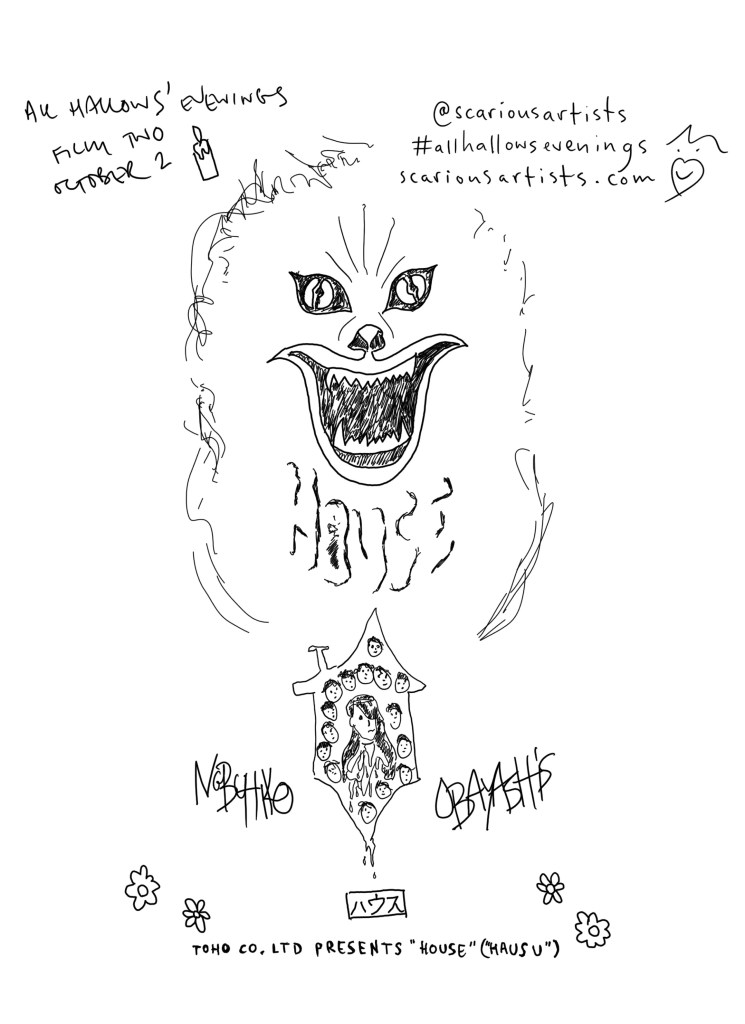
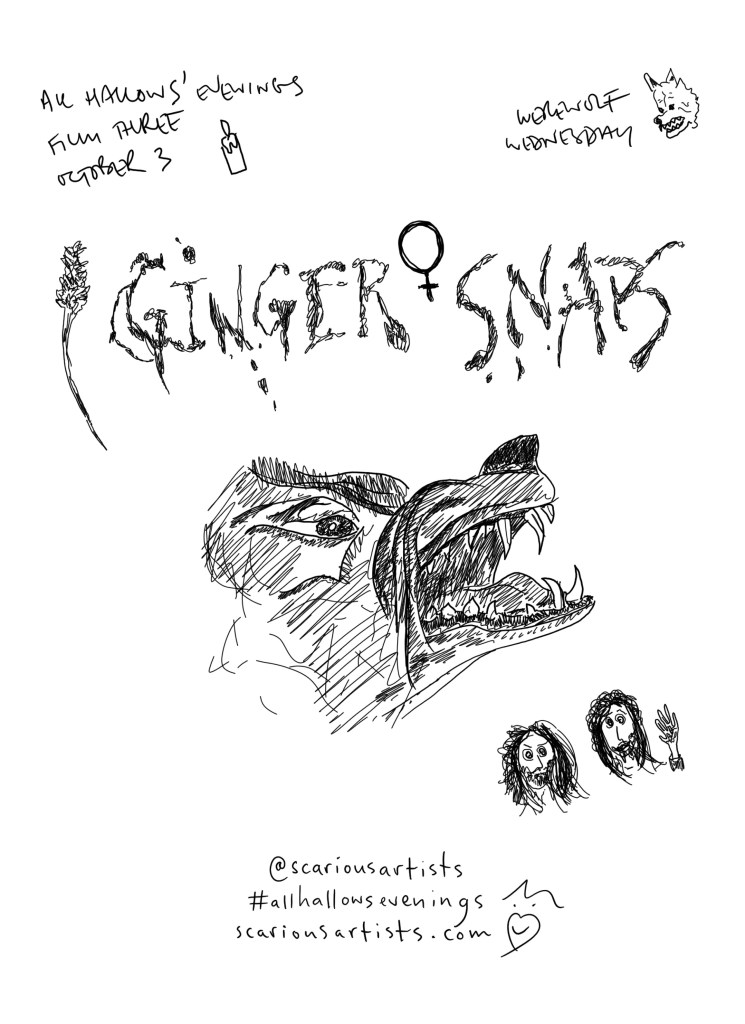
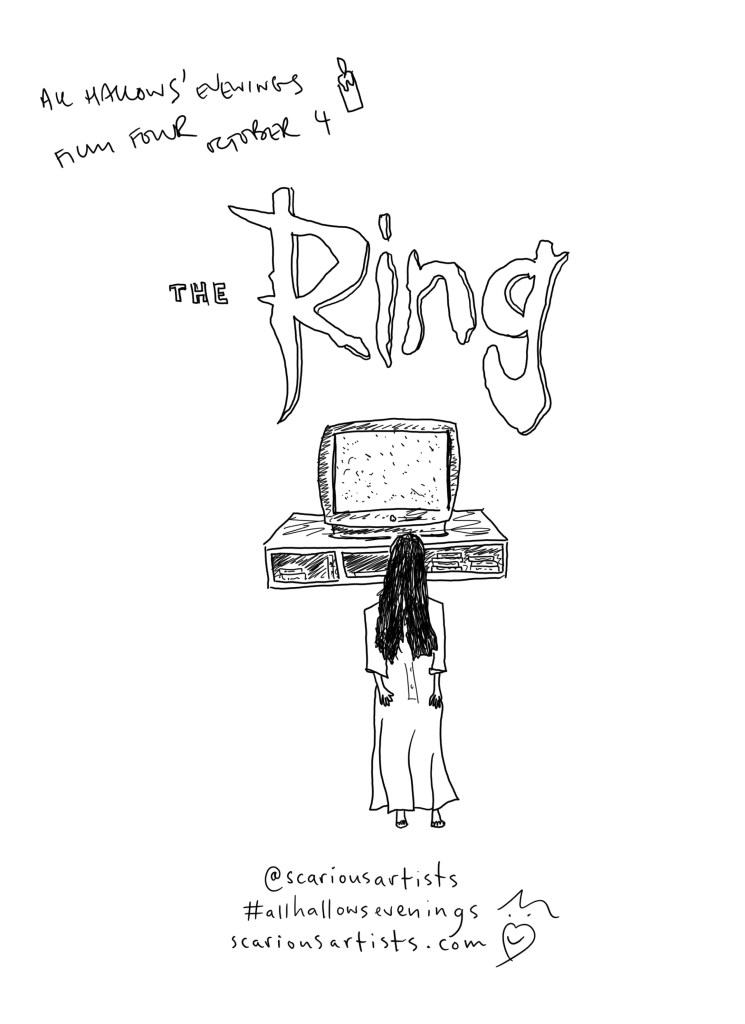
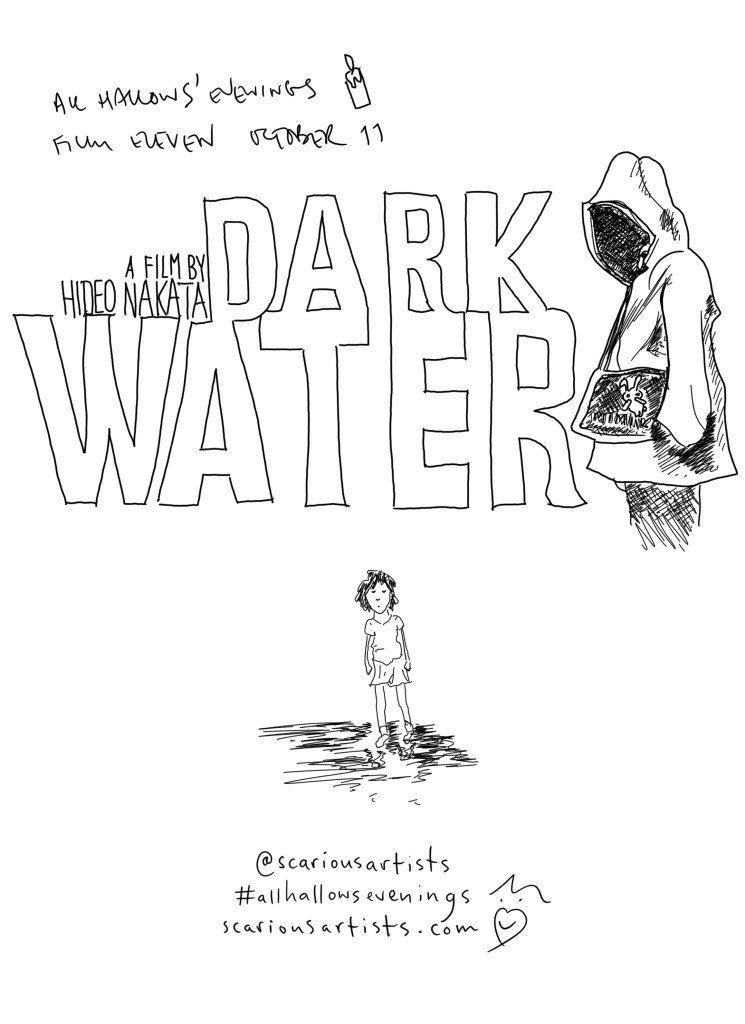
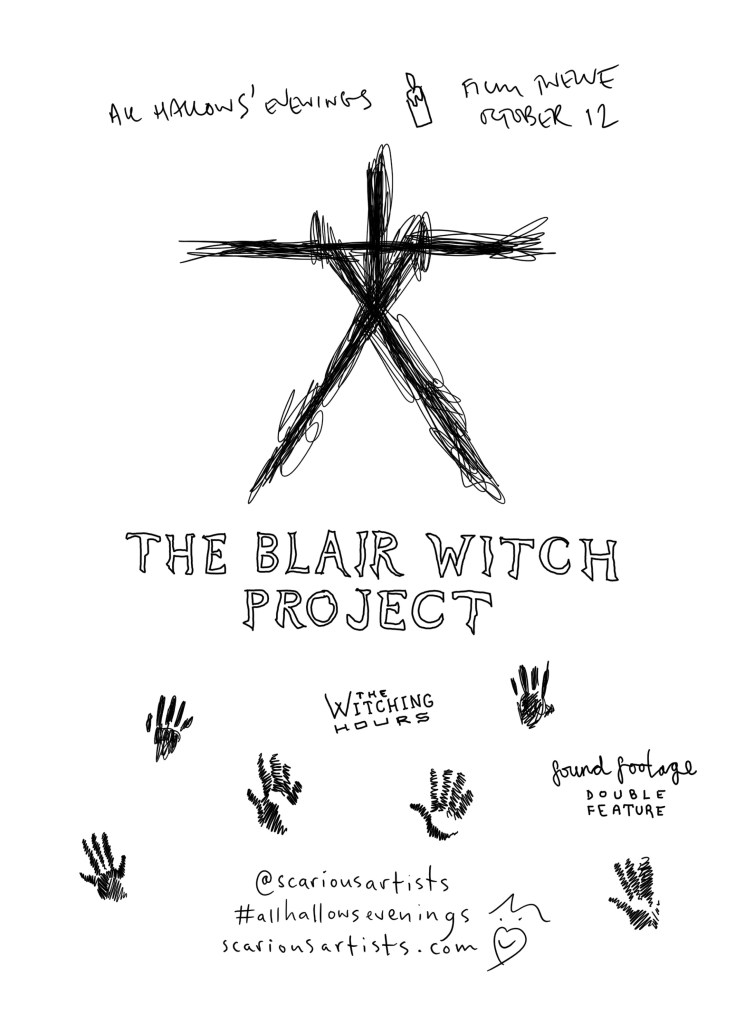
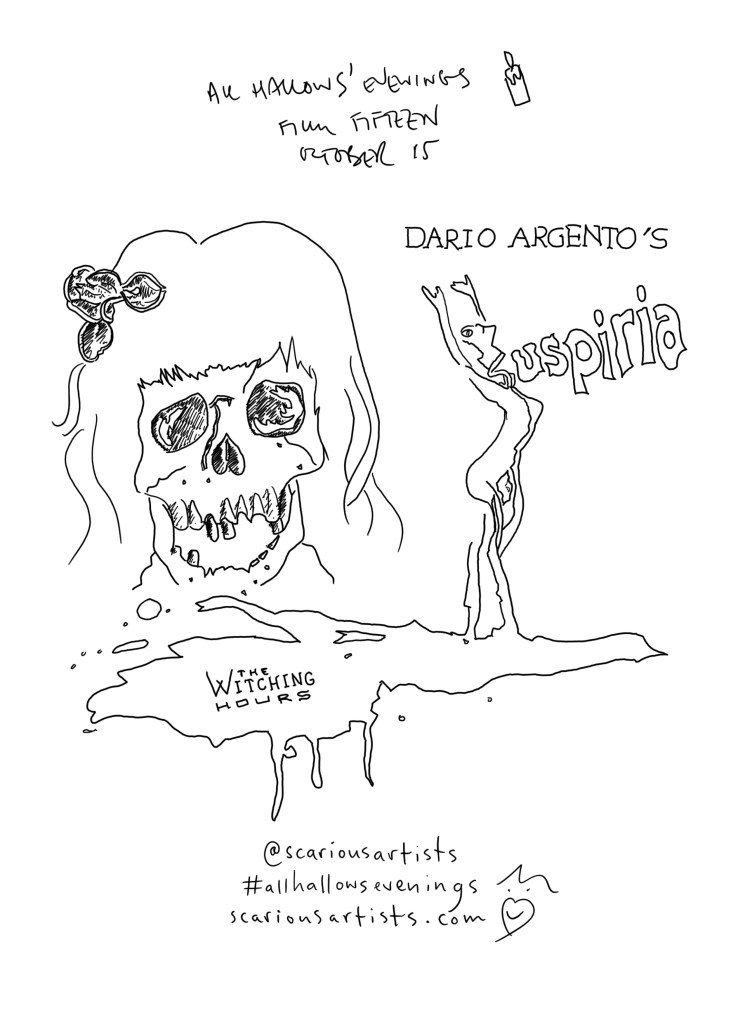
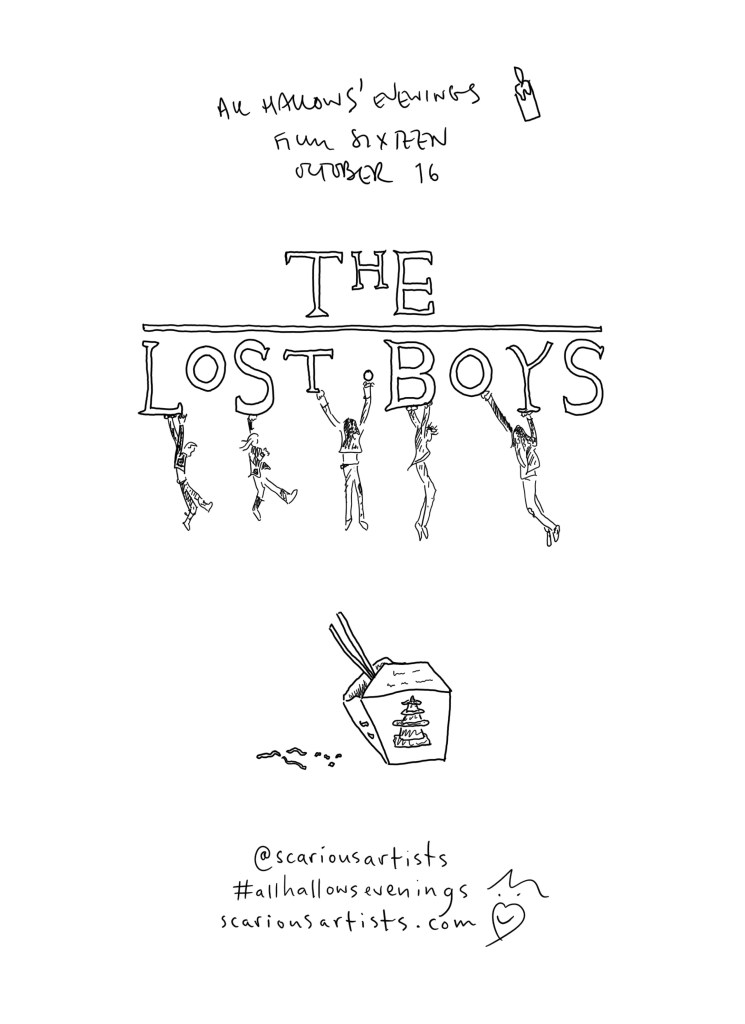
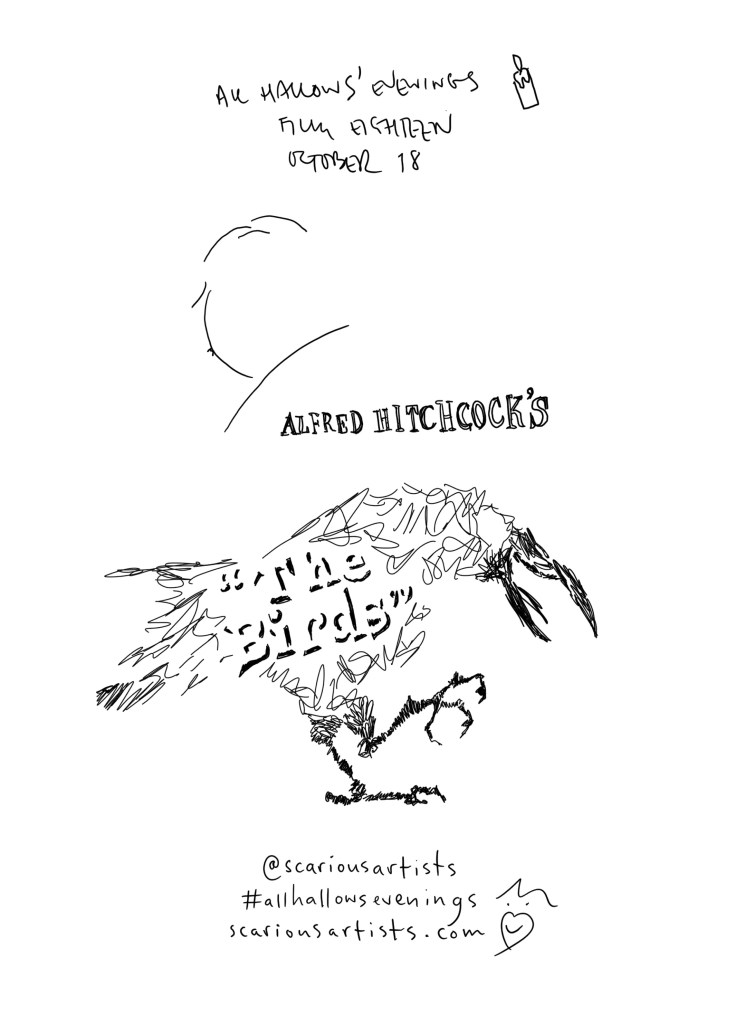
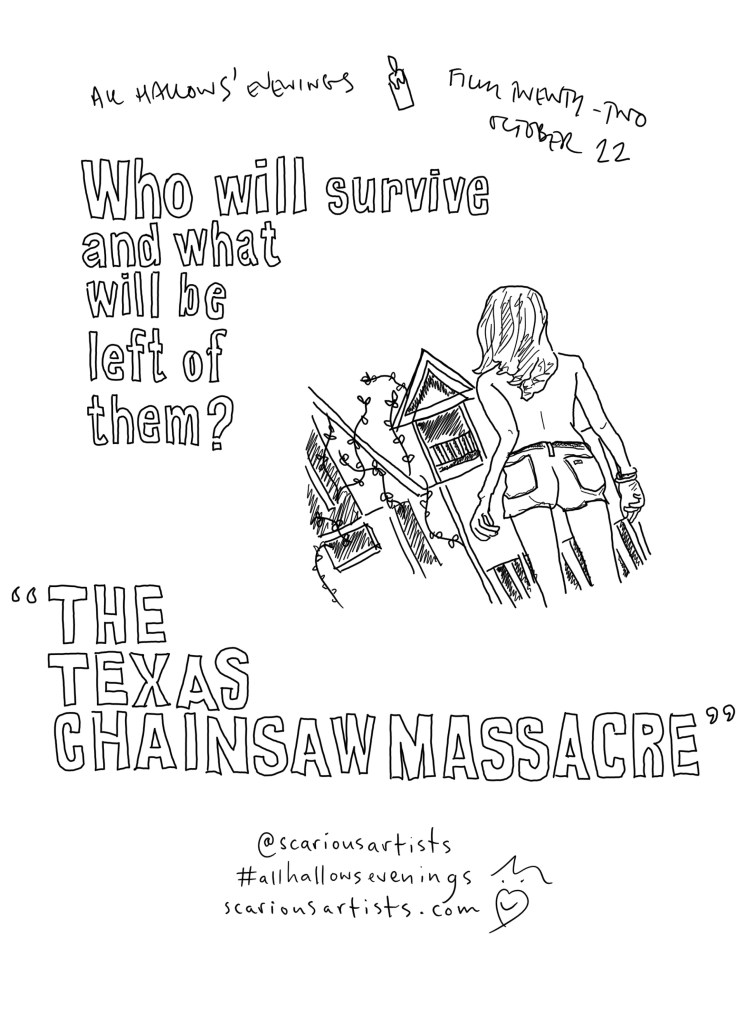
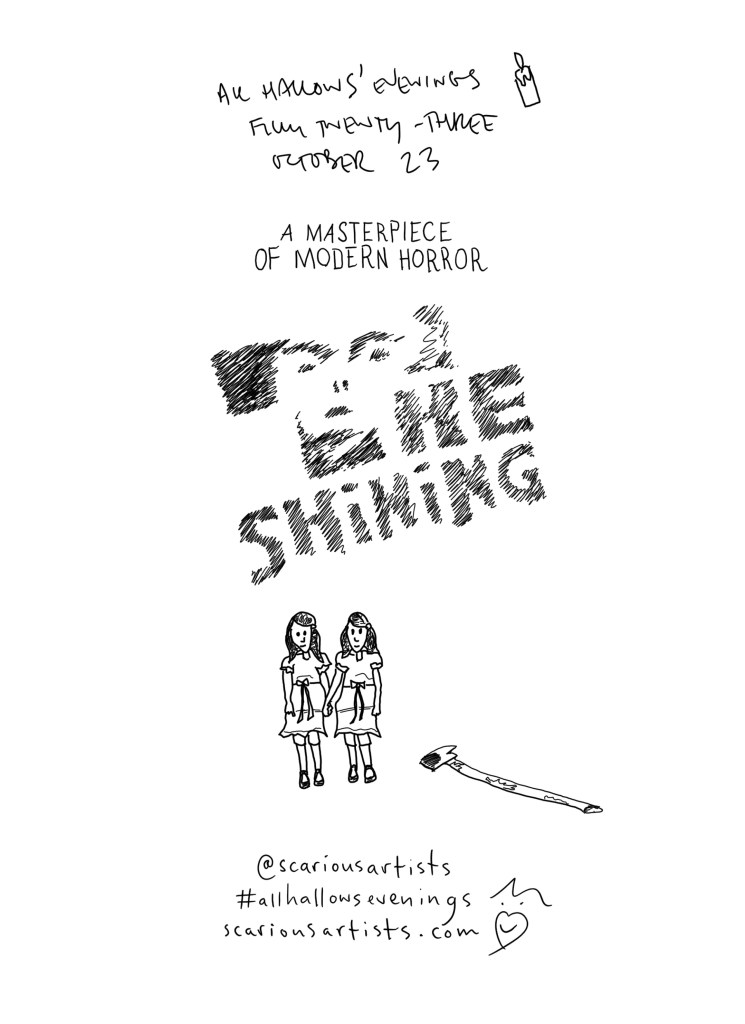
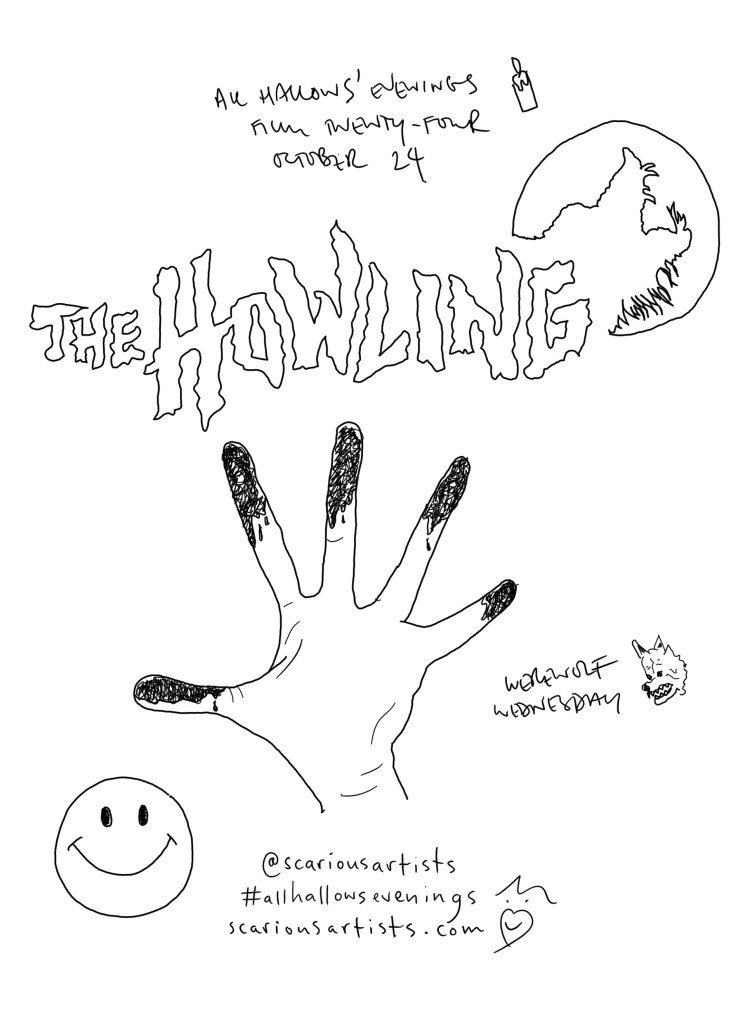
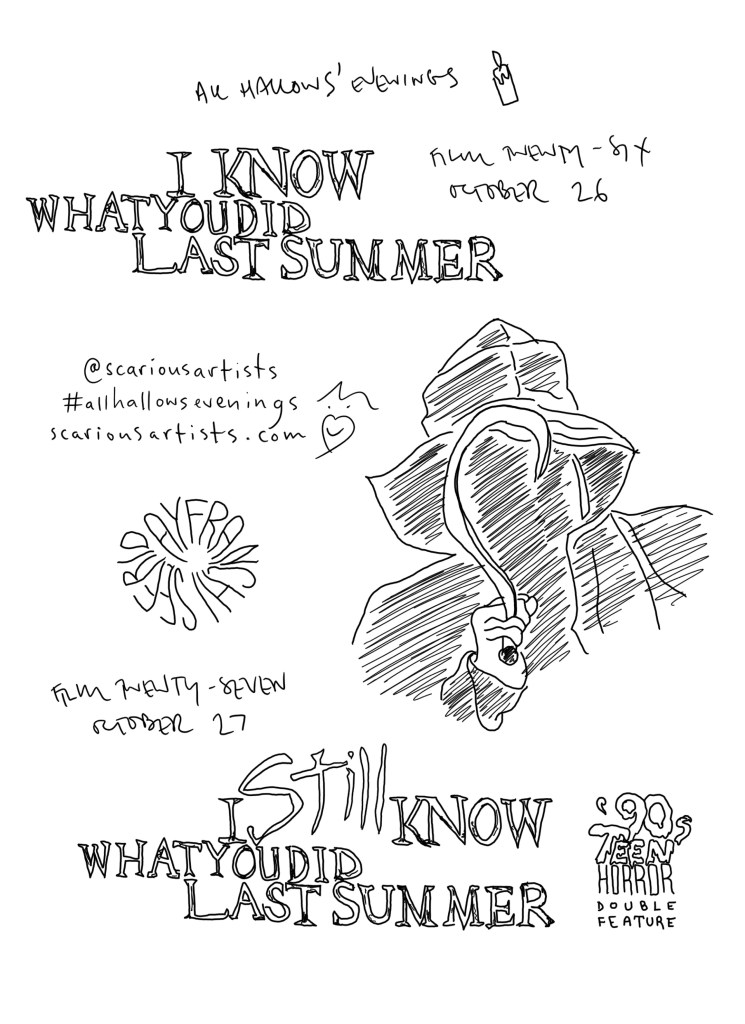
In 2018, myself, my extremely patient girlfriend, and a band of likeminded comrades in Jeonju, South Korea, embarked upon our first ever #horroctober—one horror film every night throughout the month of October. We named ours All Hallows’ Evenings.

It’s not a particularly clever or diverse curation of titles, but it’s what we ended up with, and what we actually saw through to the bloody end. Please enjoy Werewolf Wednesdays, the Dead By Dawn duo (my favourite beer and pizza double bill), a Neve Campbell ’96 pairing, The Witching Hours, a found footage coupling, a frightening Franchise Friday, and the 40th anniversary double feature, Halloween: The Nights He Came Home.

It was a mad rush to finish the accompanying drawings. I used a cool little Wacom Bamboo Slate tablet, which allowed me to draw directly onto paper with the ink pen provided, and digitally convert at the touch of a button using the Wacom app.

This playlist represents the first incarnation of a Scarious Artists project, back in 2012. It began as the throwaway title of a 2CD Hallowe’en compilation—a daft pun on Various Artists, which spiralled each year into a longer, ever-evolving catalogue of mildly macabre party-appropriate (and not so party-appropriate) tunes.

Some lucky souls even got physical copies with handmade, Universal Monster artwork. I made a few of these Hallowe’en mixes over the years, including spooky Hobbycraft felt pouches, and little USB thumbs in coffin boxes with red tissue paper interiors. You can freak out to the digital version below.