Matt hails from North Yorkshire, and presently resides in South Korea where he teaches English. He escaped the Northern Film School in Leeds with a master’s, and is now an award-winning filmmaker and podcaster. In 2020, he wrote and directed the acclaimed sleep death in suburbia short, The Self-Seers.
Anyone who’s ever upped and moved to a new town recognises The Lost Boys’ eighties, tropey Karate Kid vibes. I responded immediately to the plight of the Emersons—not because I ever relocated myself as a child, but as I’m from Catterick Village—ten minutes from Catterick Garrison, which remains the biggest army base in the UK, my school friends’ dads would regularly get posted, meaning they were history. I was relieved to have stability—to feel comfortable, but it was always sad to lose friends so often. This was also the first film in my life that induced a nightmare, and without me even seeing the full film. It was merely a trailer, or a clip, which showed the vampiric lads initiating Michael into their flying bloodsucker gang by dangling beneath violently juddering tracks, as an approaching train neared, until the inevitable happened, and their weakening grips faltered, sending them plummeting into a misty abyss—only their voices still carried, undead; alive in the wind. In my dream, I was also hanging from the same rattling rails, and unless I let go in time, would’ve had my fingers severed. Of course, as soon as the rollicking train was overhead, I woke up startled.
I don’t know what planet this is—Planet Schumacher, I suppose, but I don’t care. It’s so compelling to watch, and his liberal use of the fantastical has a welcoming, inviting feel. Yeah, it goes haywire. On one hand, you’ve got Corey Haim singing in the bath, and on the other, Jason Patric, going full, existential Brando, amid a junkie crisis, and it amazingly plays. It’s a remarkably odd fluctuation, and combination of tones, but it works. It turns farcical at the end, but wraps up excitingly with a final, action-packed sequence. The comedy lands, there’s enough at the core, enough subversion, and it’s enough of an update to the vampire subgenre, with a myriad of improvements and additions. Vampires have always had an applicability—they’re a readymade device for exploring the human condition. Although ever-evolving, the vampire lore archetypes are pre-established, and well-known by audiences, so Schumacher could immediately play with them here—the nature of the half vampire, garlic, holy water, crucifixes, transparent reflections, hypnotic abilities, inviting a vampire into your home renders you powerless, regenerative healing, sunlight burns their flesh, the ability to fly, and the bat bit, where the guys are all kipping upside down, hanging from the rafters. It’s a movie that cleverly adopts certain tropes, and discards others.
Is The Lost Boys, in fact, a gay parable? I believe it to, at the very least, contain elements of one. The openly homosexual helmer, Joel Schumacher (Flatliners, Falling Down, Phone Booth), hung a poster of Rob Lowe with his midriff out in Sam’s room, which again, could be some kind of in-joke, or nod, as he was in the director’s previous picture, St. Elmo’s Fire. I don’t want to get too Tarantino in Sleep with Me, with his Top Gun subtext spiel, but it’s all a bit, “Go the gay way,” isn’t it? It’s a forbidden initiation. Michael—with an already established absent father, gets an earring, and a leather jacket, and rides a motorcycle. We don’t have to get into what drinking the blood represents. They’re all male surf-Nazis around the bonfire—not a female in sight, just lustful looks and liquid spurts—like a decadent, fires of hell urge that Michael miraculously manages to resist. He’s essentially watching a gay orgy at that point, and fighting his powerful, preternatural desire to participate. It’s not a battle for Michael’s soul; it’s a battle for his sexuality—it’s David versus Star. The “appetizer” reefer offering in the cave lair is crucial, because if you remove the joint, that particular scene could be interpreted as being covertly about peer pressure and drug or alcohol use, but because the filmmakers included weed, it arguably becomes metaphorical for a sexual initiation. This is right about where Schumacher’s childish, “Goonies go vampire” (sorta) romp turns politically subversive. Theories aside, it’s certainly about our fear of people who, more generally speaking, live outside the mainstream—whether it’s entirely sexuality-based, or broader.
I’ve watched The Bodyguard perhaps as many times as Frank Farmer’s watched Yojimbo. Alright, maybe not that much. But I’ve seen it a lot… I’ve seen it a lot. Due to that, this was an effortless first encounter to trace, as I have pristine memories of the summer surrounding my initial viewing back in August of ’93. To explain, my cool expat bachelor uncle—wearer of Natural Born Killers and controversial Janet Jackson tees, and purchaser of my first (and last) air rifle, was an ankle-holstered, triad-battling (with confirmed kills, I believe), detective inspector in the Hong Kong police force and we visited fairly often for family holidays. We stayed at his Kowloon apartment, close to Kai Tak Airport (famously used on UK Saturday night telly’s The Krypton Factor as their go-to flight simulator strip for landing aircraft) where the descending planes flew so close overhead, it felt like we had to duck to avoid them.
Hong Kong held many key cinematic memories for me over the years. August of 1988 was the month my dad, and a 6-year-old me, were glued, beginning to end, to Steven Spielberg’s Duel, in the Cantonese restaurant of a country club, on a little portable telly, while my sloshed family and their friends sang karaoke in the next room.
Hong Kong, 1988
Our first family holiday to Hong Kong was soundtracked almost entirely by Whitney Houston’s 1987 album, Whitney, featuring the track, “I Wanna Dance with Somebody (Who Loves Me),” and countless other smash singles. My mum bought it as soon as we returned to the UK, and subsequently looped it constantly in the car every single day. I knew it backwards and forwards.
This neatly foreshadowed our ’93 trip, where as a twelve-year-old, I had got hold of a luminous water pistol with a removable, detachable clip, and I’d Frank Farmer my way around my uncle’s house, shoulder pressed to the wall, mimicking my favourite film actor. Kevin Costner was firmly in my consciousness following Robin Hood: Prince of Thieves, and I even had a magazine pull-out poster of Kev in Clint Eastwood’s A Perfect World Blu Tacked on my bedroom wall before even seeing the film—the image of the shade-wearing, paternal Costner and the kid beside him was enough.
It was one of the happiest times in my life—pre-adolescent growth spurts and prior to spots, never-ending summer games of heads and volleys, the commencement of Year 7 at secondary school, but with no real homework or weighty academic pressures to speak of, school disco slow dances, and a prolific era with the “ladies”—we were all only twelve, but writing postcards to my many “girlfriends” (friends who were girls) was clearly a priority back in ’93—in fact, one of my school friends, Zoë, kindly sent me a picture of her Hong Kong postcard recently, which she’d sweetly kept all these years. You’ll be relieved to know, I have since learned to spell “restaurants” correctly and am less excited about watching True Lies.
In ’95, Hong Kong memorably subjected us to the coldest cinema ever created, for a showing of Casper, where my nana was so frozen under the air con, we had to wrap her in a shawl. But it’s still our August ’93 summer holiday that remains my favourite, with landmark life bookmarks such as being snuck my first taste of a Jack and Coke (“this Coke’s gone bad”), visiting the incredible water park, Water World (not that one, Kev), ordering chips with ketchup and necking endless Shirley Temples by the pool, seeing my mum wheeled around an underground car park in a shopping trolley by a mad, sozzled Australian man like a deleted scene from Jackass, nighttime showings of Timecop, True Lies, The Good Son, and The River Wild were dotted throughout, and the bragging rights of seeing certain films before they were even in cinemas back in the UK—as back then, Hong Kong was on the same schedule as the States in terms of theatrical releases and video rentals. I suspect that’s why TRUE LIES! was written in all caps, and has an exclamation mark after it in my postcard to Zoë.
Alongside buying nudie lady pens for the lads at school, and paper hand fans for the lasses, and between my taste-of-home video marathons of ‘Allo ‘Allo! and Only Fools and Horses under the air con, my uncle would take me to the local convenience store, where I’d load up on gallons of Schweppes cream soda, Milka Alpine Milk bars (for the fridge—a sense-memory technique I still practice to this day to combat the chocolate-melting Korean summers and remind me of those happy days gone by), and most exciting of all, with his approval, I’d shoulder the responsibility of picking a VHS rental or three to keep us all (my parents and grandparents) entertained at night (my 3-year-old sister was wisely tucked up in bed away from the explosions and violence). Whether it was Lethal Weapon 3, Blown Away, or In the Line of Fire, we’d screen my selected movie that evening as a family on his living room telly. Although I’m sure everyone was humouring me, it was my first crack at film curation, but I really only had two selfish criteria—do I want to see this, and can I get away with picking it up, or coyly pointing it out on the unreachable top shelf?
The Bodyguard‘s cruder lines like, “Someone broke in and masturbated on the bed” and, “But I can’t fuck you,” surely sailed over my head back then, but the overall impact of the story and film remained. In fact, I have a theory that I was somehow cunningly distracted at key adult moments in these movies by a vigilant guardian during scenes such as Miss July ’89, Erika Eleniak’s eye-popping topless cake dance in Under Siege, as I have absolutely no recollection of witnessing them—I mean, that, or feeling painfully embarrassed in front of the entire family, and something tells me I wouldn’t forget seeing them—I mean, it. Bodyguard baddie, Portman’s head (and TV camera) exploding wildly on the other hand, remains as vivid as can be.
Pipped to the top spot of the US box office by Disney’s Aladdin, The Bodyguard raked in $411 million worldwide, opening to mixed reviews, and sold 45 million copies of its smash hit soundtrack, which also snagged three Grammys, and still rules supreme as the best-selling movie soundtrack of all time. In spite of being rejected by studios 67 times in just two years, The Bodyguard was, in fact, Lawrence Kasdan’s (The Empire Strikes Back, Raiders of the Lost Ark, Body Heat) first “really good” screenplay—even if he says so himself, and was inspired by an idea to reimagine Akira Kurosawa’s 1961 samurai film, Yojimbo (Bodyguard) with Toshirô Mifune, and cast Steve McQueen as the lead—a visual cue that eventually led to Costner’s shortly cropped hairdo, which became one of the more shallow yet revealing topics of controversy in 1992, in the sense that the public would fuss so much over a Hollywood actor cutting his hair for a role.
For the unproduced, seventies incarnation of The Bodyguard, soul songstress, Diana Ross, and unstoppable lothario, Ryan O’Neal, were set to feature as the pop starlet and her protector, however, following a real-life love-in between the leads, the project fell by the wayside. After meeting and discussing the seemingly lost film on the set of Kasdan’s sophomore effort and Big Chill follow up, Silverado, Costner showed keen interest in playing the titular character, and as his star rose to prominence in Hollywood, Kasdan reignited the embers of The Bodyguard with Costner’s clout ensuring an immediate green light. His 1987-’91 run of movies, from The Untouchables to JFK, had solidified him as the leading man to beat, branching out with the multiple Academy Award-winning Dances with Wolves (including best director), and popcorn-blockbusting his way to MTV Movie Award stardom with Rewind fave, Robin Hood: Prince of Thieves. By ’92, Kev was calling the shots. The Bodyguard is really Costner’s project. He revived it from development hell, it was his bright idea to cast Houston, and insisted they wait the three years necessary to secure her in the role, he cast the director, and he, for all intents and purposes, cast himself. The biggest movie star, and the biggest music star were to be united.
In Hong Kong, I stealthily moved around the house, toy gun in hand, with my back to the wall like Farmer, I still use his reply, “I’m fine, how about yourself?” far more often than I need to, I quoted Frank’s father’s line about his son handling fear to my first girlfriend, in a vain attempt to appear cool, and I used to drink vodka and orange juice like him (although in more conservative measures). These were my idiosyncratic reference points. As a man—especially a young man, to calibrate your masculinity, and pitch it just right, can be a minefield. When I think of masculinity, I often refer back to Steve McQueen and Paul Newman as the mainstays—the mentors. As a boy, Harrison Ford and Kevin Costner seemed like the modern equivalent (to a degree) screen examples of modern masculinity, and I often imagined, what would these guys do in this situation?
I looked up to Costner in his roles. The stoicism, cool detachment, and brute bursts of physical threat made him a rival to my go-to action lead, Harrison Ford. Factoring in Robin Hood’s selfless fight for good, there may have been more humanity to Costner than his ’70s counterparts, but it’s hard to simultaneously be insouciant and emotive. The critiques aimed at him were, I think, largely unfair, because to me, he was attempting something demanding—to deepen his male characters, humanise the McQueens of the past, and engage ’90s audiences with more heart—often his stoicism was misread as dead-eyed and drab. He was doing detached, but adding a layer of internal conflict. As this is less operatic than an all-out dramatic leap, it failed to register with so many. It was subtle, but I always saw it. It registered with me in The Bodyguard. I saw it in Prince of Thieves, I saw it in the poster for A Perfect World—I even saw it in Waterworld.
What saved Kev from falling into the one-note acting trap of certain doom here, at least for me—at least as a kid, was the waveform pattern of Frank Farmer. There is a fluctuation to his performance, demeanor, and volume (as simplistic as that sounds), certainly lacking in Waterworld, and in spite of being a terrific movie, one could argue, Robin Hood also. But every now and then, Costner reveals that other colour—a blunt moment of anger. His “Save it, Devaney!” and “I didn’t tell you to fuck everyone in the hotel!” outbursts are enough to periodically counter and compliment his strong silences, and pensive pauses.
There was, of course, in Costner’s mind, only one woman who could portray Rachel Marron—Whitney Houston. Singing counterparts such as Barbra Streisand (Funny Girl, The Way We Were, What’s Up, Doc?), Cher (Moonstruck, Mermaids, The Witches of Eastwick), Debbie Harry (Videodrome, Hairspray, New York Stories), and Madonna (Dick Tracy, A League of Their Own, and in both the following year’s titillating turkey, Body of Evidence, and Abel Ferrara’s Dangerous Game) had already paved the way and diversified their careers by adding lead actress to their list of accolades—but in ’92, a frosty encounter with Kev, during Madge’s revealing docu, Madonna: Truth or Dare, ruled her out of any casting meetings. It was instead, Ms Houston’s chance to shine on the silver screen.
We discussed the nature of morbid fascination in light of actors’ passings in more depth on our Rewind episodes for both The Misfits, and The Crow, but this recent viewing was my first Bodyguard revisit since Houston’s death at just 48, which similarly colours the film quite darkly in retrospect. Whitney looks radiant, sings like a bird, and as a debut performance, it’s strong—with the qualifier that she’s not a thespian; merely a singer trying to crack a new market. What helps, albeit in a fairly morbid manner, is that The Bodyguard exudes melancholy throughout, now we’re aware of Houston’s approaching fate with personal demons, big drugs, and bad Bobby Brown.
Whitney has this uncanny ability to hit a note flawlessly, and after a few seconds of holding, it dissipates into an indescribable vibrato—we can hear it clearly and most famously here on stage, whilst performing her final, monumental, (Costner-requested) a cappella rendition of Dolly Parton’s sad country ballad, “I Will Always Love You.” As powerful as it is delicate; it’s not just an incredible voice—the intricacy and detail of her delivery and enunciation are technically perfect, but also expressive. She’s untouchable in that no one else sings quite like her. Yeah, Mariah had a fair crack at it with her own glass-smashing, supersonic falsetto—but Whitney‘s calculated, yet innate singing style was so unique. It was clearly a natural gift she’s managed to hone and perfect.
Her casting is the master stroke of The Bodyguard. I’m unsure anyone else could’ve played Rachel even half-decently. For a film debut, it’s fine but flawed. The fact she’s portraying a pampered diva pop princess-turned actress certainly helps matters. Real-life death threats, kooky fans camped out at her concerts, pop star problems, should I cancel the gig, etc. It was all worryingly meta, and as a result, there’s a lot of Whitney Houston in Rachel Marron. Mick Jackson was shrewd in his direction, in that he forbade her from attending any acting lessons, and urged Houston to approach every scene like her musical performances—to identify the underlying emotion, and articulate it.
In The Bodyguard, it’s hardly love at first sight between Frank and Rachel, but they do share a moment. She sees he’s not just some buff lunkhead; some big goon—he’s a potential partner. Rachel immediately challenges his masculinity with her,”I don’t know, maybe a tough guy?” dismissal of his physical appearance, but he smartly replies, “This is my disguise.” I like his drawl; his laconic, almost-Buddhist lack of engagement—no ties, no long term commitments, and zero effort to impress. He doesn’t need to impress anyone in that room with boastful comebacks. The problem arises when he fails to impress audiences. So when Frank parcels out quips and pleasantries to Rachel, Fletcher, and “the cocky black chauffeur,” it is charming, but perhaps unavoidably, some filmgoers find Costner cold, and understated to the degree of being dull—a humbling flip-side to his “zero fucks given” approach to many of his characters.
How often is a pop culture icon immortalised flawlessly on screen? I’m thinking James Dean in Rebel Without a Cause or Marilyn Monroe in Some Like it Hot levels of iconography. For me, Whitney Houston in The Bodyguard is, at the very least, in that same conversation—maybe even approaching that league. She’s 29 here, and arguably the best she ever looked. For all the imperfections in performance; all the lack of experience as an actress, The Bodyguard serves as a record of her talent, beauty, and spirit. How important it must be, for everyone who loved her, to retain an everlasting document of that person. Who else could have played it back then? Who could play it now? That question alone makes The Bodyguard a worthy revisit. “So why don’t you go back there and keep watching?”
Given the lack of discussion around the film beyond its dual stars, we can assume no one’s writing home about its technical prowess. However, from the cold, almost silent, classy opening, with Farmer’s, “Stay down” line, and a slow-paced, craned back oner, Mick Jackson sold me hook, line, and sinker on The Bodyguard. It’s a bold start, filled with intrigue, and boasts a darkness absent from typical romantic dramas.
Jackson skillfully employs a vital creedo, that whatever a character is up to when we first meet them should reveal something about themselves. This is key in effective, coherent filmmaking—Fletcher’s sailing his remote controlled boat around the swimming pool, and it ever so subtly and subconsciously, plants future imagery in the mind of the audience. So when his curiosity gets the better of him later on, and he attempts to take the boat out onto the lake alone, we are somehow more accepting of the act, as the film has visually foreshadowed the character’s fate. I also always appreciate films that cut when they want to—not when they need to. It proves proficiency, structure, and forethought through economy of camera coverage and editing. Jackson cleanly bookends The Bodyguard with two of these measured, confident shots.
Does Costner have sexual charisma? Does he have any charisma at all? Is she even attracted to him initially? It sure seems so in that silent swap of looks, but where’s the real romantic meet cute? It’s absent here. A flirtatious, teasing, verbal tussle fizzles quickly and switches to an authoritarian stance where Rachel lays down the law. For me, Whitney does enough to compensate. In Prince of Thieves, Mary Elisabeth Mastrantonio was very PG. Costner was cheeky and handsome as Robin, but never overtly sexual. Here he’s dark, brooding, and intense as “fierce Frank,” and terrified of just one thing—not being there. Farmer’s professionalism and initial standoffishness is the role. I don’t want a smoldering performance in that scene. His mind is on the job and nothing else. Who knows, perhaps his absence of starstruck sycophancy is what actually attracts Rachel to Frank.
A deleted scene (unless you’ve watched the US TV version) featuring Farmer silently and sympathetically removing Rachel’s boots, stockings, and Cleopatra meets Metropolis robo-corset, after her ill-fated “Queen of the Night” club appearance, offers a mere glimpse of what could have been in terms of sensuality. It unfolds so subtly. It’s not an on the nose romance at this point. They each have to drop their facades to connect, and this scene is the earliest instance of that. She’s almost catatonic—drained of all her usual bravado. This sensuous, but caring and considerate moment holds so much tension, I wondered if excising it could’ve been a real mistake. It’s completely wordless; entirely visual, lasts almost 2½ minutes, and, if reinstated, would maybe rank among my favourite scenes. No words, just actions. The potential for a sex scene is there, but Frank would never capitalize on a moment like that, when Rachel is so traumatized, in spite of there clearly being a moment of electricity between them.
This scene could have been one of the most iconic in the movie, yet only the television audience were privy to it. It adds another dimension; another window into their relationship. It shows her burgeoning, implicit trust of him. She’s totally traumatized, but doesn’t stop Frank from undressing her. It’s only when he starts to remove her top where their eyes meet and address the moment, but in spite of the overt chemistry, he has nothing but protective, gentlemanly intentions. The care and attention in which he undresses Rachel runs parallel to the methodical way he approaches his job, and it highlights how it would be so easy for someone to fall in love with their bodyguard; the person protecting them from any outward threat, yet through that professionalism, denies themselves the pleasures of love. Rachel knows, especially after Frank’s hardly inconspicuous “Run to You” MTV session, that he’s interested. She knows she can seduce him, but she also appreciates that he won’t make a move on her. In fact, he will kick back against any feelings he has in order to protect her, and there’s a rare purity in that, which she values. It also makes much more sense that Rachel would make a move on Frank the following day. It’s a logical progression lacking in the theatrical cut. The way she shyly asks him on a date, and stumbles over her words is due more to her embarrassed acceptance of their shared moment the night before.
So what happened to the fabled, suspiciously absent Costner-Houston roll in the hay? Was it ever shot? Could it have been surreptitiously excised the way Denzel Washington and Julia Roberts’ screen tryst was a year later? Was it sadly a case of the central romance being a political hot potato, even as late as ’92? Did they bottle it? Was race a factor? Was this Bobby Brown putting his “possessive,” “jealous,” spousal foot down? Yes, Rachel’s got her midriff out. She flirts with him and asks him out, and her bedroom eyes and, “Do you want me to beg?” shtick goes a long way in the moment, but there’s nothing even approaching nudity. That’s about as much as we get. I can only picture the faces on these prudes when they heard what Sharon Stone was up to over at TriStar. This was, of course, 1992—the year Hollywood sex scenes went full frontal with Paul Verhoeven’s Basic Instinct. An easier explanation is that Houston flat out refused any nudity. However, other reports stated she called the scenes that were shot, and ultimately removed, “tasteful,” and yet another disclosed that she used a body double for them all anyway, so it remains a mystery.
Look how the virtually unrelated BBC TV show, Bodyguard, dealt with love scenes. Keeley Hawes and Richard Madden’s bedroom shenanigans ranged from prolonged, blurry, out of focus, abstract kissing, to full on, blunt but underwhelming intercourse, and was described as cliched, tasteless, mechanical, and distracting. Perhaps it’s best unseen after all. If The Bodyguard had explicit scenes like this, perhaps it would have been ridiculed like Body of Evidence, as opposed to just dismissed as a somewhat middling and mediocre romantic drama. Do we want to witness how Rachel’s lingerie got wrapped around the samurai sword? The logistics of that particular manoeuvre could be dangerous, humorous, or alternatively, elicit Showgirls levels of cringe. Is it another case of being careful what we wish for? This isn’t a movie anchored around a handful of nude scenes, using filler to pad out the remaining runtime. If a love scene doesn’t further the story or tell us more about the characters, then it’s superfluous, and likely gratuitous. Having said that, I’m still torn. A Tony Scott-esque, silhouetted, blue-hued moonlight rendezvous writes itself, surely? Just picture it. It’s a no-brainer, and potentially an all-time iconic movie sex scene.
There’s an argument the sizzling chemistry—by some vague accounts anyway, bothered studio executive suits, and both interestingly and allegedly, Whitney’s bad boy beau, new jack swing pioneer, Bobby Brown, who were concerned about the interracial aspects of the love story impacting the commercial prospects of the movie, and the explicit intimacy of his wife with another powerful male star respectively. There’s also a tabloid conspiracy case, fuelled partly by Costner’s heartfelt eulogy, that perhaps the two leads did get together in real life, and the filmmakers, led by Kev, were masking that forbidden tryst by cutting any overt steaminess, or explicit nudity out, and locking it away in a Warner Brothers vault so forbidden, that even the 30th anniversary of The Bodyguard couldn’t break it out. Again, this is all speculation, but why would Costner cut scenes because they were “passionate?” Is that not the entire point?
By many accounts, the makers of The Bodyguard were, at the very least, concerned about the interracial aspects of the love story, and its impact on the salability, public acceptance, and overall commercial clout of the movie. Even Costner let one slip with his, “Risks aside, we went with Whitney” quote, so there was evidently a controversy factor behind the scenes, and in the media coverage at the time. The online Bobbie Wygant interview archive is exhaustive, and it seems every podcast we record; every film I research, she’s got a chat with the director or stars on YouTube. I’ve begun to despise this phony old crone. She’s so haughty and conceited—tarted up in sequins and earrings, spewing provocative, passive-aggressive leading questions Whitney’s way, like, “How do you think African American men will feel about it?” referring to the interracial romance, and “Did your husband, Bobby Brown, want you to do the film?”
Whitney can be entertainment for these hypocrites, but she’s somehow unworthy of playing the object of Kevin Costner‘s desire. It reminded me of a scene from the Louis and the Nazis documentary, where the unapologetic racists’ record collections were jam-packed with people of colour, whilst they simultaneously spew abhorrent beliefs surrounding all non-whites. The lack of a love scene in The Bodyguard somehow highlights the underlying, unspoken prejudice in Hollywood that was shockingly still prevalent in the nineties, and I’m sure reverberates throughout the acting world and beyond to this day.
I’m hesitant to build The Bodyguard up any more than I already have, as it’s more often than not, brushed off as a throwaway—even by its own filmmakers as, “A movie you take your sweetheart to, and make out a little bit.” To me, it’s worth a little more than that. Farmer‘s ability to remain level-headed and professional (except when he’s lashing out and double-handed ear-clapping Hispanic blokes in kitchens) serves as a close to the bone metaphor for the protective, occasionally overbearing nature of a man in love. Yes, it’s just a romantic drama, and heightened to the point of daftness at times, but it’s also a solid suspense thriller with looming, ominous moments, tied inherently to themes of jealousy, envy, protection, and revenge.
It’s a peculiar premise, in the sense that our couple presumably—even evidently, with Frank’s closing scene depicting his continued work in the profession, go their separate ways. It’s not to be, and they’re old enough, and experienced enough to know that. They have no choice but to accept it. “I Will Always Love You” expresses that exact sentiment, too. You’re in love, but it’s not the right relationship—you know it, and she knows it, too. They’re too different. They’re from different worlds. It burns out, and the 360-degree screen kiss we witness at the conclusion is the pinnacle of their doomed romance. As Sandra Bullock wisely taught us in Speed, “Relationships that start under intense circumstances never last,” and by Speed 2: Cruise Control, her character of Annie had ditched Keanu for Jason Patric, so the saying is obviously, unequivocally true. This is a forbidden love story, and that fleeting, shooting star is what makes Costner and Houston’s shared screen-time in The Bodyguard so special.
I can totally recall my oldest friend, Rob, and I watching RoboCop together, possibly as young as 8, and gravitating towards ED-209. I’m not certain if we saw the theatrical version, or a censored cut taped off the telly, but I do remember the film adorning the top shelf of Kleer Vu—the first video shop I ever stepped into. That was the place where you could buy kitchen appliances and rent Beverly Hills Cop II on VHS in one fell swoop.
Another slight link was my childhood friend Dave (keen Rewinders will recognise him from my multiple anecdotes about the times his older brother acted out select scenes from Schindler’s List as if Liam Neeson was playing Taken‘s Bryan Mills, and not Oskar Schindler) having an Action Force (G.I. Joe for our American friends) figure, skillfully painted chrome silver by his other older artistic brother, to look like RoboCop. This character was frustratingly invincible, and naturally, every kid wanted to play as him.
Of course, at that age, we all missed the satire, the media jibes, and general skewering of the USA—filmmakers viscerally force-feeding America’s own violent appetite back to it, the majority of the darkly ironic humor, the political commentary; everything really—other than having a simplistic and shallow, boyish attraction to a crime-fighting cyborg super cop. Verhoeven duped us all again, aged 15, when we devoured his dual-layered, Starship Troopers in 1997. Just as RoboCop showed us grisly ultra-violence and humorous robotic effects, Starship Troopers gave us blood, bugs, and boobs and had us cheering for fascists. Any narrative subtleties regarding propaganda, American foreign policy, or allusions to Nazism and the Third Reich were entirely lost on us and sailed high above our daft little heads.
Perhaps the most vivid memory I have of the RoboCop films relates more to the sequel than the ’87 original. To set the scene, I’m eight years old, watching a taped Film 90 with Barry Norman (which had been skillfully set to record overnight to VHS) and up pops a clip package from RoboCop 2—I can still recreate the scenes, shot for shot, in my mind. The first depicted a scientist, sweating profusely in the back of a soon-to-be-bombed mobile lab truck, as a SWAT team close in, retreat, then dive away from the ensuing explosion. This was followed immediately by an inventive street chase, which ended with RoboCop clinging onto what looks like an armored ice cream van, as the smug driver (Nuke Cult leader, Cain—played chillingly by Tom Noonan of Heat and The Pledge fame—an actor I would cast in absolutely anything and everything if I ever got the chance) borderline-comedically smashes our android hero into a telegraph pole to dislodge his robotic grip.
That was enough to hook me. I watched it, and rewatched it, again and again, until I could eventually get my hands on the real deal—a copy of the full film (I imagine on VHS rental close to a year later, around ’91), albeit missing a wee bit of carjacking, some graphic, prostitute heel violence, extra slot machine head smashes, a few of Cain’s surgical slices, several graphic shootings, and a RoboCain neck break, thanks to the perpetually overzealous killjoys at the BBFC.
This would mean I’d already seen and become a fan of the first RoboCop by 1990, although I have no memory of my first viewing. I can picture another school friend recounting Murphy’s death, and quoting the line, “Well, give the man a hand!” to me. That bloodthirsty scenario existed solely in my adolescent imagination for some time, marinating, until I could witness it for myself. This built expectation and tension, and unlike the typical letdowns of adult life, it did not disappoint. It was thrilling, terrifying, and extremely disturbing to see Murphy shredded by gunfire, left in agony as he’s taunted, and then finally executed with an ice cold nonchalance. This was by no means a common fate for the heroes in my film collection—and for it to happen so early in the running time too. It really shook me up.
The bloodthirsty ED-209 prototype intro, and the butcher’s shop carnage of Murphy’s grisly execution, in particular, still sit uncomfortably. As does Clarence Boddicker‘s spurting deathgasm, and Paul McCrane’s melty toxic waste truck collision. There’s really nothing quite like Paul Verhoeven and Rob Bottin’s movie gore (according to a making of, the Dutch director requested three blood pack squibs in place of the typical one, for the bullet hits in RoboCop) and for me, this and Total Recall remain his two greatest hits.
With Verhoeven’s perspective certainly shaped by the bombed, Nazi-occupied Netherlands of his infancy, he’s a smart, humble man, crediting the two writers, Mike Miner and Ed Neumeier, along with producer, Jon Davison—who coined the catchy phrase describing RoboCop as, “Fascism for liberals,“ with the US-specific political satire and social commentary woven throughout the movie.
Verhoeven drew inspiration from Dutch abstract painter, Piet Mondrian, in the sense that his abstract work often consisted of vivid blocks of colour, harshly divided by thick black lines. He used this concept to make leaps forward in Hollywood filmmaking, and editing, employing blunt cuts to TV news reports with no prior warning. For example, prior to RoboCop, it would have been far more likely to see a character watching television before cutting into a full screen scene of that particular programme, to give the scene context. But here, Verhoeven hurls us straight into the fire, and we, the audience, must rapidly calculate any context ourselves, as the quickfire edits and juxtapositions add up. These ironic news report vignettes were, in part, influenced by the CNN television coverage of the 1986 Challenger disaster, in which a space shuttle exploded in mid-air above crowds of onlookers, before cutting away abruptly to a commercial break. This struck Verhoeven as an odd, insensitive contradiction in tone, which simply wouldn’t occur in his home country at that time, but may reveal something about the America depicted in RoboCop.
RoboChrist or American Jesus are initially laughable pseudo-alternate titles to RoboCop, but they do hold some weight. The humiliation of Christ by passing priests with their taunts of, “Come down from the cross!” are echoed in the childish whines and taunts of Clarence’s gang. The rebellion against the teachings of Jesus, is mirrored in the disdain for Detroit’s police force. The post-resurrection simplicity of Jesus’s moral guidance is akin to RoboCop’s simplistic prime directives. Finally, walking on water, corralled by Verhoeven’s equivalent of the Walls of Jerusalem frames the denouement, and death of baddie, Clarence Boddicker.
James Cameron’s The Terminator was an Orion release, and allegedly, The Austrian Oak also had his cyborg sights set on playing RoboCop—another indestructible, unstoppable robot which, in reality (and in Cameron’s original Lance Henriksen-teasing concept art), should have been played by someone a little more… human-lookin’. As we’ve discussed, everything Arnold touched turned into a Schwarzenegger film—RoboCop, however, is by no means a Peter Weller picture; it’s anything but actually, in spite of him nailing the performance, and becoming a real emoting machine. Here, it’s not the ego of the lead that dominates the movie—the story runs the game. With Verhoeven’s film, it’s decisions—sometimes micro decisions, that serve the tale, not the self-importance of the talent, or the projected ideology of a Hollywood star.
Weller‘s performance, especially in the “third act face” makeup, with his helmet removed, is exceptional, and not easy to pull off. As Alex Murphy, it’s all in Weller’s eyes, but what happens when the windows to the soul are obscured? Maybe it was his mime research, or the football pad rehearsals that gave him an edge, but the character seeps through the metallic suit, and pours off the screen in little splashes and bursts, whenever it’s required.
Crucially for the filmmakers, Weller was a triple threat, as he boasted, “A good mouth, lips, and jawline,” not to mention, he was skinny enough to fit the suit, and was a physically fit marathon runner. During casting, Rob Bottin remarked, if Arnie had donned the RoboCop armour, he’d likely look like the Pillsbury Doughboy, or the Michelin Man.
Peter Weller is burned into my consciousness as Murphy andRoboCop. So much so, that I didn’t even entertain the idea of watching the franchise beyond 1990’s RoboCop 2. To this day, I have never seen RoboCop 3, because A. Weller’s not in it, 2. They apparently kill off Nancy Allen almost immediately, and D) I heard he has a jet pack, so why bother?
I was, however, a touch disheartened to hear tales from the set painting Weller as a RoboDiva, with him going all method, insisting on being called, “Robo,” and refusing to say the scripted lines as written—he was unhappy with the three prime objectives, in particular, and when he kicked up a fuss and stropped off set, it was stuntie, Gary Combs, who stepped in temporarily while Weller sweated it out, before returning with his tail between his legs when he realised he could be replaced literally in an instant by his stuntman, no less. By all accounts, he’s a bit of a kook. Talking of nutty actors in the orbit of Verhoeven, one of the director’s go-to thespians, Michael Ironside, was initially offered the part of RoboCop, and bewilderingly demanded to rewrite the script himself, and for RoboCop to have a harem—of women, presumably.
In terms of sound design, when RoboCop enters the 7-Eleven, and the armed thug screams, “Fuck me!” over and over, there’s this resonant hum; a deep pulsing I can only imagine is non-diagetic, and informs us not only of Robo’s presence, but also acts as an omen of the impending action heading our way. That same vibrating drone happens again when Murphy enters the boardroom to eliminate Dick Jones.
RoboCop also boasts one of my favorite scores from any of the films we’ve tackled so far on the podcast. I found myself pottering about the apartment, just listening to the Blu-ray menu on a loop. I love the music in the Boddicker gang car chase with the truck, and Murphy and Lewis in hot pursuit the score there is terrific, and leads us trepidatiously (especially upon repeat viewings) to the bad guys’ hideout—the rusty-piped steel mill. As a side note, I once heard Charlie Brooker rave about the Nintendo Game Boy theme for RoboCop on Desert Island Discs, and ever since, it’s never left my consciousness. It’s arguably the greatest video game music ever composed.
The look of the RoboCop character was designed and created by practical effects maestro, Rob Bottin—known predominantly for his work on John Carpenter’s The Fog, and his career-defining, most-impressive project, The Thing, Joe Dante’s The Howling and Innerspace, and for teaming up with Verhoeven again on Total Recall and Basic Instinct. The main reason I reject most CGI, is because I grew up with this guy launching unforgettably violent imagery into my eyes and mind—and he achieved it practically.
How could, the icy touch of CGI, ever compare to this craft? This tactile mess of palpable, textured tissues? As a self-confessed vinyl guy, Quentin Tarantino often says, “You can’t write poetry on a computer.” A touch dismissive, perhaps, but he’s onto something. It’s a paintbrush versus a mouse; a pen and ink versus a computer—tangible, practical effects versus the clean, digital pixels of CG. In spite of there being a human sat before each and every one of those monitors, somewhere along the way, to me at least, a great deal of humanity is lost. If you’ve ever seen The Thing ‘82, you know what I’m on about. Anything created on a computer surely pales in comparison to the icky insanity of its on-set, gooey, animatronic horror—and there are clear traces of the same mad methods in RoboCop, five years prior.
The practical effect when Clarence blows off Murphy’s hand is nausea-inducingly splattery—and the way Emil explodes as Boddicker’s speeding car ploughs into him, sending watermelons and pig intestines sky high for that weeping toxic waste death. I remember when I showed RoboCop it to my younger cousin, Marcus, who was very disturbed by Clarence’s extending spike to the jugular demise, and immediately uttered the words, “Why didn’t you warn me?”
It was the Jaws syndrome once again—the suit wasn’t perfect, they hadn’t worked out how Weller was going to move in it quite yet, and all of his rehearsals with a mime artist had to be scrapped at the last minute—that’s the reason Robo is slowly revealed in layers. This problem would simply not occur today in the wasteland that is, “do it digitally, paint that out, we’ll solve that later, fix it in post,” etc. In ’87, if you couldn’t perform it for camera, and win the approval of the crew, execs, director, whoever—it simply wasn’t acceptable. Remember the scrapped Predator costume, which rightly sent John McTiernan and Stan Winston back to the creature design drawing board the very same year?
Although Rob Bottin’s extravagant make up is insanely impressive—and he’s justifiably lauded for his work on The Thing, the Murphy face reveal marks the point where the humanity within RoboCop is truly recognisable, and the character really begins to elicit empathy. Everything suddenly changes when helmet is removed. The world stops. It would’ve been easy and kind of mindless to keep that helmet on throughout, but it visually amplifies the fact there’s a guy in there—not just a guy, the man we met earlier, and liked immensely. It’s an effect I find quite disturbing—almost like someone you know has slipped into a coma right before your eyes. Or developed dementia. It’s them, but not quite. We catch flashes and glimpses of the person we knew, but now they don’t quite even know themselves. One of the most rewarding aspects of the film, and the character of Murphy, is that he manages to unlock his own mind. He solves his own mystery, and that final line of, “Murphy,” is moving in a way we don’t quite anticipate. We’re not quite prepared to be touched after the satire, and the gore, and the action that preceded that moment. It’s a rare treat in this genre.
Another instantly recognisable effects artist, who contributed immeasurably to RoboCop, before his untimely industry exit (of sorts) circa Jurassic Park in ‘93—unfortunately and unfairly rendered extinct by the seminal blockbuster’s successful leap from go motion animation to state of the art CG, was Phil Tippet—now thankfully appreciated for his epic, 2021 stop motion magnum opus, Mad God. Yes, there are some scaling issues on ED-209—sometimes it appears enormous, then compactly fits into a stairwell, but when it emits that eerie whirring, and barks out that menacing mechanical growl, it has an undeniable, handcrafted charm.
It’s tricky to articulate why computers can’t quite replicate something weighty, and although stop motion is flawed and kinda old fashioned now, it had a charm that CGI lacks. To my eye, at least, it’s rarely on the money. JP ’93’s night time T-Rex attack on the cars blends animatronics and CG seamlessly and to this day stands up as one of, if not the finest computer effects of all time. Why? Because they had something to prove. Add to that the preeminent filmmakers on the planet were behind it from concept to competition. They were convincing themselves. Not a hotdog-scoffing, Coke-guzzling audience, and although CG is created by humans in front of monitors, that humanity is almost inevitably lost in translation.
Even an old soul like me understands that stop motion plays a little wacky to the modern eye, but it’s no more laughable than some of the slapdash CG I’ve been subjected to over the last thirty years. Besides, matte paintings can often be just as cinematic and spectacular as digital environments. My firm favourite in that regard, after stumbling upon a showing on Channel 4 during my filter coffee and TCM era of mind-expanding film consumption, is Powell and Pressburger’s Black Narcissus, which bewilders and spellbinds me on each viewing with its stunning painted scenic backdrops. Based upon that example alone, even contemporary CG-rendered backgrounds can look inferior to vintage, practical sets. Precarious to pinpoint why, but I believe it has something to do with the warmth and human touch of practical, versus the impersonal pixels of CGI.
A handful of modern moviemakers, such as Christopher Nolan, are strong proponents for, “If you can do it in-camera, do it in-camera.” Then you embellish, and enhance digitally. But originate on film, and use traditional craftsmanship in cohesion with the latest fancy trends. Don’t seek to replace—look to merge. The true enemy; the lazy approach we must steer away from, as soon as humanly possible, is the entirely green screen set. It’s the destroyer of imagination, character interaction, a sense of place, and physical setting. Remember when it used to be funny to say, “Look up there at the tennis ball on a string,” but it turned out to be the death knell—the first nail in the coffin of modern cinema. Dear trailblazers, like you, George Lucas—and more guilty these days, James Cameron. I, for one, don’t want that trail to be blazed. Leave the old path alone.
I still think there’s a forever home for miniatures, or “bigatures” (coined, I believe, by Weta Workshop on The Lord of the Rings) in cinema. Perhaps it’s my childhood fascination with action figures, train sets, painting miniatures, making models, and figurines, that has shaped my somewhat rigid view, or perhaps it’s something deeper. Maybe the ease of digital has replaced forethought, and essential, on-set trial and error. The impatient tantrums and control freakery of an auteur like Verhoeven, led to the pursuit, at least, of in-camera perfection—the likes of which post-production computer fakery, to this day, fails to equal or even rival.
RoboCop remains a terrific ’80s action movie with intelligence to burn. Verhoeven nails the satire, the gore, the iconic imagery—albeit a tad rigid in its photography at times. It’s lamentable that there are, in all likelihood, very few 9 or 10-year-olds watching films like RoboCop. I dread to think what the modern equivalent would be—especially if the flashy, cacophonous, and ultimately empty suit that was 2014’s remake is anything to go by.
Grandad mode on! Kids (and big kids wearing shorts and baseball caps) these days are Marvel-obsessed—DC is about as dark and edgy as it gets in their infantile minds. They’ve never experienced a drug dealer being hurled through window pane after window pane, then skewered through the jugular by a giant robotic needle and spurting claret all over the shop. Or their hero protagonist getting his extremities blown clean off before being ripped to shreds by a hail of automatic gunfire. Or completely unnecessary coke-fuelled threesomes as a throwaway brush stroke to a scene. And I pity them, for they know not what they’re missing. Because, believe it or not, the best films were not made in 2022, or 2021 for that matter. We have to go back. We have to rewind.
El Mariachi man, and Rebel Without a Crew, Robert Rodriguez, brings us a bodysnatching Breakfast Club via John Carpenter’s The Thing—filtering his kinetic action through Kevin Williamson’s preposterously articulate ‘90s teen milieu (real adolescents come off as grunting neanderthals compared to his erudite depictions). The Faculty (originally titled, The Feelers) boasts a panoply of horror-show jump scares and stings, sitting comfortably in class alongside the preeminent genre movies of the era.
Aged 16 for its VHS release, and armed with with my lacklustre attempt to mimic the spiky Dexter Holland hairdo of the day, I was fully in from the outset. The opening riff from mainstream pop-punkers, The Offspring’s “The Kids Aren’t Alright” was the perfect entrée, kicking in riotously over the now trusted Dimension Films logo—Bob Weinstein’s branch-out Miramax division, specialising in teensploitation horror, that had already gifted us The Crow, From Dusk Till Dawn, Scream, Scream 2, and Halloween H20: 20 Years Later.
In fact, this formative era boasted many a film I would loop on video, and imitate as scripts and college shorts. As we mentioned on our Wild Things episode, the television stars of the day had been unshackled, and their unfettered performances in more adult fare coincided with their adolescent fans’ coming of age; watching them exploding sexually on film, whilst simultaneously exploding sexually ourselves as keen movie-going voyeurs.
Here’s an essential Teen HORROR 2000 🔪 playlist, consisting of the more prominent memory lane films from that impactful, yet brief, 4-year run from 1996-2000 including Scream, The Craft (top Neve ’96 double bill, there), I Know What You Did Last Summer, Scream 2, I Still Know What You Did Last Summer, Urban Legend, The Faculty, Halloween H20, Disturbing Behavior, Blair Witch 2: Book of Shadows (a death knell follow-up to 1999’s original Blair Witch Project, which served as the codifying playbook of the impending found footage sub-genre—although dismissed as unfashionable at the time, it’s perhaps a little unfairly derided now, in my book (of shadows), as a half decent teen horror, and looking back, serves as a clear as day representation of the final death rattle of a dying sub-genre), and Scream 3 (the subpar nail in the coffin of the franchise that started it all). Scary Movie should also be mentioned as it’s inevitably a spoof that undermines and ultimately kills a cinematic stretch like this—once the tropes have been underlined and highlighted, there’s really nowhere left for it to go.
But amid the duds, the best of that bunch undoubtedly triggered, and perpetuated a real movement—fronted by Williamson’s zeitgeist-defining voice, with its snarky, self-aware touches, and meta “rules,” seeing characters playfully negotiating the filmic realm of the slasher with unprecedented awareness.
Typically, Dimension’s teen-targeted treats tended to hook us with their “hip” soundtracks, and The Faculty was no exception. The Offspring, hell bent on world domination with their chart-infiltrating, something’s amiss album, Americana, and their crossover from pop-punk to pure pop smash hits, “Pretty Fly for a White Guy” and “Why Don’t You Get a Job?” offered up “The Kids Aren’t Alright.” For me, the deal-sealing, nostalgia-cementing, end credit surprise of Oasis’ dying heyday B-side gem, “Stay Young” did the trick. D Generation’s “Helpless” pops, and serves as a raucous backing track to Zeke’s ubercool Pontiac GTO introduction. “It’s Over Now” by Neve rings out prettily, and is an instant emotional transporter back to ’98. Soul Asylum cover Alice Cooper’s “School’s Out” quite capably, but the less said about Creed’s hashtag “hungadungadang” redo of “18” the better.
A pre-Frodo Elijah Wood stars as Casey Connor, who goes from masturbating to monster-baiting as the juice box sipping, straight-A student photographer, and outcast-pisswad-anal probe turned unlikely hero, and girl-getting, celebrity ladies’ man. Clea DuVall (arguably the movie’s MVP) plays faux-lesbian “goth beast,” and sci-fi aficionado, Stokely, and as her unlikely love interest, the most unknown actor of the gang, Shawn Hatosy, is star jock, aspirational D student, and captain of the football team, Stan.
Josh Hartnett, despite sporting the same dubious H20 haircut only a man as handsome as he could pull off, hunks it up as the nonchalant, too cool for school know-it-all, Zeke—a homemade hack drug (and fake celebrity porno tape) entrepreneur, and wunderkind-slacker contradiction.
Five-alarm fire, Jordanna Brewster (The Fast and the Furious), in her film debut, is the insouciant, raven-haired, smart-ass journo, and head cheerleader, Delilah (swoon). Robert Rodriguez has, thankfully, throughout his career, been a proponent for pushing Latin actors to the fore, casting everyone from Antonio Banderas and Jessica Alba, to Danny Trejo and Cheech Marin. Rodriguez regular, Salma Hayek (Desperado, Roadracers, From Dusk Till Dawn), returns (against type) as the dulled-down, stuffed-up, nurse Harper, after playing the snake-schlepping, super sexy Santanico Pandemonium in Dusk two years prior. Here her sultry charms are as well-disguised as the thirsty alien invaders.
One doesn’t necessarily think of The Faculty as a Robert Rodriguez film. Yes, Salma is present, but undercover, there are little-to-no gunfights—certainly none with the gravity-defying, Woo-esque choreography of Desperado. However, a Rodriguez disciple, with a keen eye for his auteur trademarks, can find clues planted throughout. Firstly, it was filmed on location in Austin, Texas—which later became the hub for RR’s Troublemaker Studios. It’s a bit dismissive, particularly when you know his key influences, to disregard The Faculty as a hired hand at work. Just because there are no Mexploitatian elements to it, doesn’t mean it’s not a Robert Rodriguez film. He’s a massive John Carpenter fan, and I see this as him slightly self-consciously branching out, and testing the waters by making a different kind of movie. This is absolutely not his writing, though—that is abundantly clear. If the picture had a voice, it would sound more like Kevin Williamson than Rodriguez, agreed—but then again, this couldn’t be mistaken for a Wes Craven film, either. There’s something to the Mariachi man’s articulation of images, and the fluidity of the visual storytelling. For me, it’s the photography, the pace, its jump cuts, the energetic editing—his hands, although a little hidden, perhaps a little tied, are still all over the film. It’s his first studio work that wasn’t a Mariachi remake, sequel, or a production in collaboration with his cinematic “brother” Quentin Tarantino, who he’d ganged up with back in ’91 in Toronto when their violent breakthrough debuts, El Mariachi and Reservoir Dogs, were simultaneously sweeping the festival circuit.
Self-funded by clinical research trials (see the “I Was a Human Lab Rat” chapter of Rebel Without a Crew), Bedhead was an early Rodriguez short, made prior to El Mariachi—also shot in that style, but in (cheaper in those days) black and white. The story sees Rebecca get a bump on the noggin and gain superpowers, which she employs to retract swift vengeance on her devious and cruel brother, David. Rodriguez even inked the animation for the credits, which I attempted to mimic on Super 8 and dishearteningly fell way short. It’s really fun and energetic, and again, although I’m no RR or Sam Raimi, it was immeasurably influential in getting me to physically pick up a camera for the first time, and run around with it—or more accurately, get pushed around in a wheelchair dolly with it.
Rodriguez’s lesser-known Showtime TV movie, Roadracers, with David Arquette and Salma Hayek, filled the gap between Mariachi and 1995’s Desperado and allowed him to hone his shooting skills before returning to the guitar case full of guns for Columbia with a heftier budget of $7 million.
Rodriguez wears many hats (usually a bandana), he operates his own camera, and cuts the movies himself—an admirable hangover from the shoestring El Mariachi days that seemingly stuck, in spite of union objections, which came to an ugly head during the production ofDusk Till Dawn. The slow, improvised zooms during takes, and ominous quick fades to black between scenes are an instant visual signifier of his work—my fave being on the late, great, Michael Parks as Earl McGraw in Dusk during its gripping opening sequence inside Benny’s World of Liquor.
As a 23-year-old, in spite of failing to take Hollywood by storm with my own debut indie feature, I found myself enrolled at The Northern Film School in Leeds, and during a brief break back home, I was such a devoted Rodriguez fan, I opted to see Spy Kids 3-D: Game Over, by my lonesome, in a Showcase cinema on Teesside, decked out in daft, paper 3D glasses. My devotion immediately fell into question.
Then, in 2003, Leeds Met alum, “the gaffer,” camera and electrical department extraordinaire, guest–Rewinder, and firm friend of the show, Joe Mac, and I, took a punt on Rodriguez’s Once Upon a Time in Mexico at the city’s Vue cinema. In spite of a few neat flourishes—predominantly a eyeless, gun-fighting Johnny Depp, I was unimpressed by the sequel, and disheartened by the digital. When the DVD came out, my heart sank again as it appeared Rodriguez had completely turned to the dark side by including a seminar obnoxiously titled, FILM IS DEAD: An Evening with Robert Rodriguez. His arguments were sound, and logical, but a vinyl guy is a vinyl guy—film is film, and digital is digital; never the twain shall meet. To explain, I’d just spent the best part of three years at technical college, clamoring to get my mitts on a 16mm film camera, just like my heroes once had. Now I was being told, that Canon XL2s and Sony PD150s were, in fact, the holy grail, and not just a means to an end—and as Jack Horner in Boogie Nights, once said, “That the future is tape, videotape, and not film?”
By 2006, another filmmaking hero, David Lynch, with his 3-hour DV opus, Inland Empire, and RR had both outright shunned 35mm, and outspokenly turned their backs on the slow, expensive, and unpredictable nature of shooting on film. Another one bit the dust! At least I had QT and PTA to cling to during my spell at film school, which saw me finally getting my paws on an Arriflex SR2 Super 16, buying new rolls of Fujifilm stock and smelling the celluloid. It felt like the end of an era, particularly at that time, as I was in the midst of cutting an independent short, shot on black and white 16mm, and debated the consequences of the encroaching digital movement at length with the director I was working with.
Rodriguez’s film-driven Ten Minute Film Schools had warped into video-hailing Ten Minute Flick Schools, that may well have been “Fast, cheap, and in control,” but also resulted in ugly, digital, and technologically alienating movies. My dedication during this newfound cause, which also saw Rodriguez spoofing himself with Ten Minute Cooking Schools, continued to wane.
It would take until Sin City in 2005 for me to truly reconnect with Rodriguez’s work, as that was certainly a film crucially born of the digital format, and it absolutely needed to be made that way to echo Frank Miller’s original stark, contrasty comic art—to make those iconic images move without any unnecessary alterations, or Hollywood embellishment.
I was so back on board the SS Rodriguez, that in 2007—the year I graduated from film school—when Grindhouse was announced, I can safely say I’d never been as geared-up for a film since my childhood. It felt like they made it just for me. At first, only knowing the titles of the two short features, I went as far as to wonder what the stories could possibly entail, and even scripted the first scene of my own Planet Terror tale about Mars, as I fell into the intentional trap that Planet Terror would have been a more expensive, space-set movie—a neat salesman’s trick often employed when marketing this kind of schlock. In fact, the Grindhouse, Planet of the Apes twist of it all being—it was Earth all along.
I bought a hardback book on the making of the film (something I hadn’t done since Jurassic Park in 1993), but much to my dismay, Grindhouse had no theatrical release up north. However, I excitedly pre-ordered the region 1 DVDs of RR’s Planet Terror and QT’s Death Proof as separate, extended edition versions, and used the already available (on YouTube) faux trailers for Machete, Edgar Wright’s Don’t, Eli Roth’s Thanksgiving, and Rob Zombie’s Werewolf Women of the SS (featuring Nic Cage as a crackpot Fu Manchu) to recreate the undiluted double feature experience at home. I didn’t see the full, official Grindhouse cut on Blu-ray until years after. As much flack as those films get, I’m still a fan—particularly of Tarantino’s slasher deconstruction, Death Proof.
Then, sadly, for the second time in his career, Rodriguez drifted away into sequels and spin-offs, and currently I’m not on the best of terms with his filmography, which is chock full of missteps and cheapo knockoffs. But the good he did back when I was a teenager, can never be undone. My original copy of Rebel Without a Crew: Or, How a 23-year-old Film-maker with $7,000 Became a Hollywood Player, plucked hastily like a hidden jewel from the shelf of my local Waterstones in Darlington, is dog-eared and disintegrating, but remains proudly on my bookshelf. I recall filling an entire two notebooks with my own extrapolations from the book, and also RR’s essential El Mariachi and Desperado flipper disc DVD audio commentaries. During my time at university, my housemates and I would periodically flip to a random page, and read where Rodriguez was with his production of Mariachi—our canary in the coal mine, and the exemplary example of a filmmaker that slashed through the red tape—or bypassed it entirely, on his own terms, and cracked Hollywood wide open. “Hero” is certainly the word. Rodriguez represented the dream I had—to make a feature by the time I was 23. Spoiler alert—I didn’t. But I’m still, to this day, thrilled to have the capability and the desire to make the odd short every now and then, purely as a form of self-expression. 2020’s The Self-Seers wasn’t quite El Mariachi in terms of international acclaim (although it was closer to Bedhead) but it did alright, and even finally won some festivals!
I compiled a playlist for The Faculty (scraping the YouTube barrel, if I’m honest, as there’s little-to-no behind the scenes, or making of footage out there—and another separate rabbit hole of clips below, dedicated entirely to Robert Rodriguez and his Mariachi affirmations and filmspiration, in the hope that it might provoke someone out there to pick up a camera and make their own movie. I did that exact thing aged 17, almost entirely inspired by Rodriguez, and two years ago I was driven (partly by his film school team talks once again) to cobble together a no-budget (award-winning) short entitled, The Self-Seers, with no-frills consumer equipment—refusing to wash away any creative problems with a “money hose.” It was an enlightening experience, and ultimately very gratifying.
I believe there’s an authentic, simplistic magic to Rodriguez and his teaching. He’s a no-nonsense guide, and someone who encourages a hands-on DIY approach. I really can’t undersell how vital his first steps were in terms of inspiring me. Perhaps it was someone succeeding without privilege, without nepotism, someone unshaken by the, “It’s who you know” fob-offs from folks, forever haunted by their own shortcomings—who can do nothing but pass on fears, concerns, and tales of failure, as opposed to focussing on the artists that slip through the net, and battle their way to where they need to be—to take it for themselves.
In a world full of naysayers, and a million reasons not to do something, this final playlist might just edge you into a zone where you feel you can grab a camera (you probably already own), tell a story, and post it online, or even enter it into festivals all over the world. If you’re a fan of movies, why not be a filmmaker? You might just have it in you. As Rodriguez often says, “Work hard and be scary.”
America slits its own throat in Martin Scorsese’s gory, NYU short, The Big Shave—also revealingly referred to by the not-so-cryptic, alternate title of Viet ’67. As artful as it is gruesomely grotesque, and as hard as it ever was to stomach, The Big Shave remains one of my favourite shorts, due to its deceptively simple concept, and hard-hitting, unforgettable execution.
I always, quite naively, took The Big Shave at slashed-face value, due to the queasy collision of its amusingly-titled jazz soundtrack—Bunny Berigan’s 1939 song, “I Can’t Get Started,” which foreshadowed Marty’s cleverly-layered needle drops, and its troubling imagery. There’s a methodical build—a routine, a ritual, that begins peacefully, and climaxes with a bloodbath of obsessive compulsive (call it what you will) tendencies, depicting the same brand of self-cleansing violence seen subsequently in Scorsese’s features. Was it an existentialist riling against futility? A depiction of a young man, likely a Scorsese avatar, who can’t make the first correct move, and ends up butchering himself in the process? Someone self-sabotaging—getting nowhere by destroying their own path and process through acts of self-harm? A man getting in his own way, by attempting to fix a problem that doesn’t exist?
The simplicity of the presentation, and the bloodthirsty act itself, renders the film with many potential meanings, and a wide applicability—yet the execution is so precise that Scorsese’s intended, overbearing message rings out and resonates loudest. Under the carved skin, it was a 25-year-old Marty’s blunt visual metaphor to symbolically express dissatisfaction and disgust for his country’s involvement and interference in Vietnam. Giving new meaning to “cut-throat razor,” The Big Shave is the doomed pursuit of perfection, whether it’s in your own immaculate bathroom, or a war-torn foreign land—a wince-worthy, toe-curling tale of American self-mutilation, and an early glimpse into Scorsese’s fascination with self-destructive characters.
The synchronicity of the music and editing is meticulous—even at this early stage. Yes, a cut is a cut, but from The Big Shave‘s opening rhythmic montage, it’s clear we’re in the safe hands of a filmmaker whose methodical cuts (in both senses here) magically and mysteriously land more forcefully and effectively than many of his predecessors and peers. It all too soon becomes a palette-battle of perfect white (for which, Marty credits Herman Melville) versus scarlet red—the latter is victorious, with a rain of blood eventually flooding down the young man’s chest and dripping into the pristine sink. Scorsese’s celluloid-surgeon cuts sit alongside literal physical cuts—gashes to the skin. The splicing technique of film editing is depicted as a visceral, violent act. His three-peated, overlapping motions of the young man removing his t-shirt echo Harvey Keitel’s head hitting a pillow in jump cuts six years later in Mean Streets, and even feel like Robert De Niro’s revolving recital of, “Listen, you fuckers—you screwheads” mirror spiel—as if perched atop a broken record in 1976’s Taxi Driver.
The climactic, self-inflicted ear-to-ear severing of the jugular is as disturbing as ever, but most unsettling for me—aside from the obvious bloodshed, was the young man’s self-satisfied admiration of his maroon mess, as he oddly grooms his crimson neckline as if it’s all in a day’s work. Tidying up a gushing wound, as if merely tackling the final bumps of stubble, removes anything kitsch, or humorous about the piece. In that moment, the short becomes a dark and pensive omen.
Arnold Schwarzenegger was perhaps the leading actor of my childhood. A close second being Roger Moore in his seven Bond outings, or Harrison Ford in Witness, The Fugitive, and as Indy. Finally, Bruce Willis as John McClane and his subsequent clones. But for me, in terms of a solid, name above the title, film-for-film action star, it was all about Arnie.
In the mid to late-eighties, the regularity in which films were shown (and repeated) on UK terrestrial telly pretty much dictated my taste. Back then, if it was screened, and I was somehow made aware before hand via trailers, I’d record it, label it, rip off the black tab if it was half-decent, and hang onto it. Hordes of VHS tapes would crowd our living room cabinets, and my modest bedroom, which would eventually overflow to fill the entire sliding door storage space beneath my bed.
Despite my protestations, my parents resisted the might of BSkyB, preventing me from gorging myself on more potential filmic treats. The folks didn’t cave in to Sky Digital until around 1999, which was still a “better late than never” blessing, with Sky Movies, Sky Box Office, Film4, TCM, etc. broadening my cinematic horizons in terms of contemporary and classic film protein—if a little delayed to drastically influence my early years film education.
Until then, Arnie on ITV had to do. I endeavoured to carve out watchable pan and scan, cut to shreds, dubbed over with less offensive language (and strong bloody violence omitted altogether), tracking-warbled bastardisations of Predator, Total Recall, Twins, The Running Man, and Commando. Predator’s tracker, Billy, being chillingly relieved of his spinal column, and Dillon’s gruesome one-arm-severed submachine gun rebellion against the creature, were left on ITV’s cutting room floor. T2’s bar room shanking, and hot stove biker guy shuffle were also frustratingly censored.
So, why was Arnold my numero uno? Why did I, other than First Blood, disregard Sylvester Stallone and his entire Rocky saga? Why, in spite of rave reviews from school mates, did I ignore “The Muscles from Brussels,” Jean-Claude Van Damme? Largely reject Chuck Norris, aside from a few repeat viewings of The Delta Force’s Major McCoy’s standing motorcycle crescendo? Spurn Dolph Lundgren, again, aside from a single-watch of Universal Soldier as a VHS rental? Most bizarrely, why did I ever accept the sloth-like Steven Seagal? Was it all arbitrary? Did the limited video shelves and TV showings dictate my taste entirely? Was it as simple as just devouring whatever was plonked in front of me? Perhaps.
I never much went in for the inspirational aspects of Stallone’s Rocky movies. In fact, I didn’t see any until I was in my early thirties. Even as a boy, they seemed preachy. They always felt forced. But I couldn’t resist Arnold’s efforts—whether he was a cybernetic organism sent back in time to kill (or protect) one of the Connors, outwitting a mandibled alien hunter in the jungles of Central America, escaping an ultra-violent futuristic game show, meeting triple-boobed hookers on Mars, hanging out with his garbage-twin Danny DeVito, obliterating an entire army to rescue his kidnapped daughter, Jenny, or good-sportingly singing “Old MacDonald Had a Farm” to a bunch of unruly rugrats—his choices always appealed. Ok, maybe not always. There were caveats. The two, made-to-measure, sword and sandals Conan movies, and Red Sonja, were one-watch deals, as spells and sorcery wasn’t exactly up my street, and the similarly-titled Raw Deal and Red Heat somehow got muddled and merged as one forgettable film.
A blokey gym-off is perhaps the furthest thing from my idea of a grand day out. As a kid, however, I was intrigued by the WWF wrestling, soap opera nature of it all. These real-life, jacked-up superhumans were my entertainment, my soap opera, my action stars. I’d gladly sit and watch Suburban Commando purely because Hulk Hogan and The Undertaker were in it. I’d wear out my Wrestlemania VIII tape, rewinding and rewatching The Ultimate Warrior’s chill-inducing sprint to the ring to heroically rescue the Hulkster from “Sycho” Sid Justice and Papa Shango’s assault. Just like these superstars of the squared circle, Arnie, was omnipresent.
This, at least now, seems contradictory to my personality. What I enjoy today is observing these muscle bound macho men from a comfy armchair as a kind of fascinating freak show. The competitive-natured, bantering boys’ club mentality of Arnold’s inner circles—explicitly showcased in Pumping Iron, Predator, and its revealing behind the scenes DVD making of, If It Bleeds We Can Kill It, is something I was largely born without.
I have, at various times in my life, been a contender for skinniest fella in the world, and would have been snapped like a twig by a brute the size of Arnold. I don’t care about physical fitness beyond having a relatively healthy body, but anything beyond that is vanity and I tune out. There’s no gym in sight. No sculpting of my physique going on. Anyone aspiring to six-packs and Instagram summer-ready bods are lost souls in my book. So the motivational speeches, and superiority complexes of the bicep-endowed alpha males, I find harmless and amusing. All power to you if your goal in life is to look like He-Man, but I personally think it’s masturbatory, and a waste of time, energy, and money.
But on the silver screen, that hulking mass of a human is paradoxically impressive to me. Again, Arnie is bigger than reality, like an artist’s rendering—a souped-up, sculpted hero, ripped (literally in the case of Conan) from the pages of a comic strip. In fact, during the production of, or prior to making Predator, a Sgt. Rock movie was discussed as a potential Arnold vehicle, and is even teasingly referenced in Hawkins’ comic book of choice during the closing credits (which I nicked for the outtakes reel for my graduation film, The Wilds, back in 2007—keep your eyes peeled at the 2:31 mark for a few youngling Rewinders).
Yes, he’s a gigantic ham at times, but who else could have played Conan the Barbarian? Arnold was too big for Hollywood. Filmmakers and studios had to mold movies to fit this beast with an inhuman physique, massive-mouthful’d unpronounceable name, and an accent thick enough that, at one point, no one could understand a word he said (see the eventually dubbed, Hercules in New York aka Hercules Goes Bananas).
I’m reminded that (friend of the show) Lance Henriksen was originally set to portray The Terminator, but the sheer spectacle of Arnold won out for James Cameron, apparently against all odds, as his entire T-800 concept was that this machine-in-disguise needed to blend in seamlessly with the common man on the street. Where on Earth would Arnold Schwarzenegger ever blend in? Arnold was practically otherworldly. This illusory flaw in his appearance was soon spun into gold when filmmakers began to follow suit and tailor big-budget futuristic sci-fi blockbusters to fit his broad frame and peculiar cadence.
Why is this killer robot Austrian? As a kid, I was either too petrified or dumbfounded to notice this curious conundrum. Yet, conversely, in Commando, when John Matrix plummets from the landing gear of a plane, only to pop-up as if he were merely bouncing on a crash mat, and go about his mission—I noticed the implausibility, but it never severed my suspension of disbelief, my loyalty to the film, or its brawny star.
None of these shortcomings really matter in Predator. His character is named “Dutch” to hide his ambiguous Euro-weirdness behind a vague veil, and explain away an accent your average American Joe could never place anyway. He’s buff, but not ridiculously so. He’s stoic, poised, speaks up when necessary—and remains a strong leader in spite of toning back the ostentatious aspects of his real life, and what would later become a caricatured Schwarzenegger screen persona in latter fare like Last Action Hero, True Lies, Eraser, Jingle All the Way, and Batman & Robin.
The Arnold recipe for success became delightfully predictable around 1990, but was ingenious in many ways. Just take a healthy dose of toned torsos, a heavy measure of heightened sci-fi world-building, a tinge of tension-breaking one-liners, a dash of disarming humour, add a propensity to always win, and out slid action classics like The Running Man and Total Recall.
Ivan Reitman’s Twins and Kindergarten Cop, were branded as the movies that, “Proved Arnold could act.” This was quite harsh and dismissive, and I feel it underrates his work the year prior in Predator, where he displayed gravitas in a challenging starring role, rarely resting on wisecracks or catchphrases (outside of “Knock knock,” and “Stick around,” anyway) to, along with McTiernan, covertly spoof the action fare of the ’80s during the intentionally overblown raid on the guerilla camp. Reitman’s work with Arnold showed he could do comedy, and would make fun of himself, and lampoon his carefully-crafted on-screen persona. Yes, they were softer stories with him playing somewhat against type, but for me at least, even prior to Twins in ’88, ever since Commando, really, we were always laughing with Arnold. He was somewhat of an unlikely all-rounder, appealing to the wrestling-obsessed kids and adolescents, and the manly men. He also emerged as somewhat of a fetishistic love interest, attractive to select female audiences, too.
I found myself in the unusual situation of agreeing with sweater-vested whingebag, Gene Siskel (twice, no less) when he stated, “You wouldn’t call Sylvester Stallone “Sylvester.” You wouldn’t call John Wayne “John,” but we call Arnold Schwarzenegger “Arnold.” Also, credit where it’s due, my other Rewind Movie Podcast nemesis (not really), Roger Ebert, wisely pointed out that Arnie, in his human roles, plays baffled and bewildered particularly well. Perhaps it’s his default setting. An, “Is this really happening?” factor seemed to colour his choices. He can play, “What is this unseen creature out there in the jungle?” to a T. In The Terminator, he’s literally a robot, which works like a charm. Then, he played against type. Just as (or perhaps after) things were getting predictable, Reitman’s Twins, Kindergarten Cop, and weakest of the bunch, Junior, showed another side of Arnold, and ushered in more self-deprecating humour.
Granted, the suitably wooden-monikered, “Austrian Oak,” was never the most talented thespian working in Hollywood, however, there’s an argument he was one of the most self-aware. He recognised his limitations, handpicked solid scripts, and showed a confident, yet measured understanding of his weaknesses—but most importantly, he clung to and nurtured his potential, and manifested success. He propped himself up with the preeminent professionals of the era in front of and behind the camera, and held the reins (comparatively) tightly, maintaining a not exactly flawless, but respectable amount of quality control over his career trajectory. His heyday, for me, is neatly book-ended by James Cameron’s first two Terminator films between 1984 and 1991.
Schwarzenegger’s cynical (which I hate), nevertheless highly effective marketing approach, can often rub me the wrong way. Personally, I have an aversion to self-branding. It always feels contrived, and a little dishonest somehow, as do the sellout Japanese rake-in commercials “Schwarzy” happily hopped into—this seems as far from artistic integrity as actors can possibly get. I’ve always been comfortable thinking more like an artist and less like a businessman, but, as I’m sure Arnold would inform me, that won’t score me the big bucks anytime soon.
He’s a deeply ambitious man, clearly conscious of his own political aspirations—so much so, that he attempted (in vain) to crowbar his “trust me” catchphrase into several of his motion pictures. Admittedly, it didn’t click like “I’ll be back.” Regardless, he lived, and continues to live, the “American Dream,” having initially identified somewhat of a violent desire lurking beneath it, and fulfilled the public desire to splash it all over the big screen with hard R sci-fi horrors, then wisely pivoted to quench the audiences’ thirst for late-eighties family-friendly entertainment. He always seemed to be tuned in. Albeit flawed, Arnold is a bona fide cult celeb, with broad appeal across the board. A smart, shrewd guy, who always understood, and evidently continues to understand America, how to play the game, and always win.
Arnold Schwarzenegger Bingo
Feel free to sit back, break out your beverage of choice (I’m not talkin’ protein shakes here), and perhaps a tequila-dippedstogie, and play the most dangerous game of Arnold Schwarzenegger Bingo (now also available as a handy Trope-Tote™).
I did a rubbish job explaining TV ad wizard, Nobuhiko Obayashi’s inexplicable cult Japanese horror and directorial debut on the podcast, so here’s the basic premise again – a troupe of quirky Japanese high school girls head to our lead, Gorgeous’ seemingly kindly yet menacing, eye-gobbling aunt’s mansion, where each of them are done away with in an insane manner, as the mysteriously wheelchair-bound auntie must eat unmarried girls in order to wear her bridal gown again. The general idea, I think, is that when we die, we can live in the thoughts and feelings of others. Flesh perishes, love doesn’t, which for something so batty, is actually a deep and lovely message.
Each gal has a stereotypical nickname and matching, one dimensional personality – “Gorgeous” is the motherless protagonist, the creative “Fantasy” constantly constructs stories, the musical “Melody” plays piano, the pigtailed, bespectacled “Prof” is studious and prudent, “Mac” eats a lot and always talks about food, “Sweet” is cutesy, timid, and afraid of mice, “Kung Fu” (perhaps my personal fave, aside from Blanche, the cat) is a heroic and tough martial artist, karate chopping and kicking everything in sight – she even has her own theme song.
Warning: this film will divide audiences. It’s safe to say, almost every frame of Hausu contains something odd – peculiar visuals and framing, mad music, an OTT performance, strange backdrops, fourth wall breaking, kooky sets, long dissolves, double exposures, human stop motion, drawn-on animation, bizarro lighting, iris ins, soft focus, slo-mo, and a batshit plotline. The way Obayashi covers scenes is so strange, but when you factor in the director’s preteen muse – his 10-year-old daughter, Chigumi, came up with the concept, and view Hausu through the prism of a child’s dream, with a young girl’s imagination running wild, constructing this psychotic kids’ show feel – the illogical structure, surrealist imagery, and peculiar tone actually make a great deal of sense; as much as a dream can, or should, make sense anyway. Then when you add bloodthirsty gore and nudity to the equation, you get a combination of ideas and tones I’d never witnessed until absorbing Hausu. Something similar, yet much more commercial, and easier to digest would be Jim Henson’s Labyrinth, which would also qualify as an approved double bill with Hausu this Hallowe’en.
Hausu is an assault on the senses and can be exhausting, but it has an innocence, charm, and a fairytale freakishness unlike anything else I’ve seen. If you fancy stepping out of your comfort zone to watch something truly unique, with instances of death by hungry piano, decapitated head bum-biting, dissolving nude underwater dips, a haunted exploding telephone, reverse motion hair in a bath, inadvertent blood drinking, a girl trapped in time and in the cogs of a bleeding clock, haunted watermelons, cannibalism, psychedelic chandelier battles, walls raining rivers of blood in a psychedelic funhouse, with a possessed, singing, blood-vomiting cat called Blanche lording over everything as a purveyor of madness and the macabre, this is the Hallowe’en pick for you.
Ghostwatch was a ’90s TV satire, and horror game-changer way ahead of its time. Cats in the machine, a possessed Parky, a “glory hole” (don’t ask), Craig Charles on valium, real-life Rainbow character, Mike Smith, and his actual missus, the delightful kids’ telly staple, Sara Green, getting lured into a haunted cupboard under the stairs – required viewing for me since my PTSD-inducing induction on Hallowe’en night, 1992. Watching real television personalities getting offed was traumatising, and I do understand the backlash to an extent. However, I also feel the film was made in the true spirit of Hallowe’en; a clever trick, rather than a mean-spirited deception.
Using the idiom of the outside broadcast, Ghostwatch opens up the Hallowe’en witchboard, I mean switchboard, to calls from the general public, who, as well as recounting ghost stories of their own, appear to be experiencing strange goings on in their own homes. Apparently, Volk originally wanted to employ a high-pitched sound on the soundtrack, which would cause pets to freak out, and for the trusted, veteran television personality, Michael Parkinson, to state live on air that “the ghost is probably in your house,” adding to the illusion that a “national seance” was being created all over the UK. These additions, of course, would have caused an unimaginable outcry, as there was already a palaver brewing without such overt provocations.
Stephen Volk denies it was a hoax or a Hallowe’en prank, but it left young viewers scarred for life, and reportedly led to the suicide of an 18-year-old factory worker with learning difficulties, who, even 5 days later, couldn’t shake the shock and was left “hypnotised and obsessed” by the programme. Although post-watershed, it arguably pushed the envelope in terms of family drama – tales of saliva on the doorstep and the mackerel, on some fella’s shoes, excrement smeared on a door, mentions of child murder, the mutilation of a pregnant dog with its foetuses scattered everywhere.
Despite being broadcast as a Screen One drama, having an introduction using the term “star in,” and a “written by” credit at the outset, Ghostwatch still duped viewers. It even fooled Parky’s mother. It was never sold as reality as such. It was clearly stated as being fiction, but that didn’t help anyone who tunes in 30 seconds late, or two minutes late, or 10 minutes late, to witness an entity speaking through a petrified young girl, the BBC studio firing sparks and exploding wildly, and Parky going “round and round the garden like a teddy bear.” People thought they were going nuts, and seeing things. The sheer genius of showing a vague image of “Pipes,” standing by the curtain in the girls’ bedroom, then rewinding the footage to check what it was, only to find nothing – the shot being altered in post. This technique and a general mischievous approach was what ultimately led to a backlash and 30,000 complaints.
It’s a study in ham and cheese acting; the mother, Pam overdoes it, and so do the kids. The callers too; it’s pretty heavy-handed and frankly difficult to believe it could’ve fooled so many. Aside from some am-dram performances and far-fetched goings on, giving the game away for any astute viewers in 2020, it’s still a staple in the found footage, faux documentary subgenre. It was one of, if not the first of its kind, and executed remarkably well; too well according to public reaction in ’92.
This 27-minute, 16mm educational oddity cropped up through a YouTube video countdown of disturbing public information films from yesteryear, and relates to myself (and Devlin, most likely), as it made the rounds on VHS in primary schools throughout rural regions and dealt with the dangers of playing on farms. As kids, my mates and I would climb trees, roll hay bales, and squeeze through tiny crawl spaces; some even snuck into the quarry across from my house. You’d hear tales from adults about how dangerous it was, and how easily we could be sucked down and suffocated in a gravel pit, or meet our end messing around with the machinery. Apaches feels like my youth. Perhaps it’s the barbed wire and stiles, the game of “Kick the Can,” muddy fields, red phone boxes, the graveyard, or Danny’s Leeds (FC, I’m assuming) jumper.
Apaches’ surreal, dreamlike premise cleverly utilises a 6-kid game of Cowboys and Indians, and crosscuts it with a “party,” which turns out to be a post-funeral gathering for our doomed narrator, Danny aka “Geronimo.” One after another, each of Apaches’ reckless bairns are involved in unfortuitous farmyard accidents. First, 8-year-old “squaw”, Kim, tumbles from a tractor trailer and is ran over beneath its wheels. The following images show her name tag being removed from her cloakroom peg at school. This heartbreaking technique persists throughout with shots of a desk being cleaned out in a classroom, and possessions being removed from bedroom drawers. Next, young Tom drowns in a slurry pit, “squaw” Sharon, aged 9, ceremonially drinks a poison toast, the effects of which are left entirely to the imagination; all we are privy to is her pained, distressed cries of “mummy!” and a long shot of her lit-up house at night. Starsky and Hutch wannabe, Robert, follows suit and is crushed to death by a falling iron gate. Finally, the fifth child, 11-year-old Danny; the leader of the pack, dies when his runaway tractor barrels over a cliff, violently throwing his body around like a rag doll. His mother sits in his empty bedroom, awaiting their “party” guests. Michael, Danny’s “daft” cousin, lives to tell the tale, and is seen at both “the chief’s” funeral, and with his family around the dinner table at the end.
How Hallowe’en-appropriate Apaches is, I’m not sure. The little ‘uns do go from playing dead to being dead. If you’re a parent, you’ll be glad your kid’s at home staring zombified into a smartphone screen, and not ritualistically drinking poison on a farm somewhere. Different times, eh? The misadventures and eventual horrific deaths of each child feel like a very real prospect. The blunt, unflinching honesty of Apaches is where its power lies; its clever structure is as imaginative as the kids it portrays. The relentless, repetitive nature of the deaths is startlingly effective. Their recklessness, and the perils of the farm loom like a horror movie slasher, picking them off one by one; the tension and suspense naturally building with each ensuing accident. It becomes hypnotic in a similar way to Alan Clarke’s Elephant – without the political weight, but nevertheless. No one seems to mourn their fallen comrades. I’d also liken the foreboding to the opening scenes of UK hospital drama, Casualty, which would tease a horrendous accident of some kind, with a hedge trimmer or a big ladder or something, and viewers would hide behind their hands, squirming, waiting for the inevitable. Inject a little Lord of the Flies, and you get a sense of where Apaches is coming from. The end credit scroll displays a troubling number of kids killed that year in accidents on farms.
Apaches is currently available to stream for free on the BFI Player, and was written by Neville Smith, and directed by John Mackenzie, who subsequently went on to make The Long Good Friday in 1980.
It was October, 1999. My best friend, Sam, and I were crammed into a packed Showcase Cinema in Teeside to see “the scariest movie ever.” Coincidentally, I also saw the other two of my top three, all-time scariest films that year – 1973’s The Exorcist, which I eagerly grabbed off the shelf and rented the same day the BBFC lifted its video ban, and 1974’s slasher classic, The Texas Chain Saw Massacre, which I also finally saw with Sam on tape as soon as it received its 18 certificate.
From Blair Witch’s pitch-perfect beginning; the Haxan films logo, the slightly juddery – as if projected, opening title, and the iconic simplicity of its opening gambit; it had us firmly in its grasp. To this day, I recall it being the most visceral cinematic experience I’ve ever had. So much so, I remember pinching a Time magazine from college with the Blair Witch guys on the cover as a kind of symbolic token. Convenient happenstance certainly played a part; the shot in which Heather smushes the Hi-8 video camera into a bag of “marshmallows,” conveniently framing the word, is uncanny. There were so many fortunate accidents like this, including the first major chill of the movie – the little girl, Ingrid, covering her mother’s mouth as she is interviewed about the Blair Witch, as if she knows, on some level, what the adults are discussing is forbidden. It’s cinematic magic in a bottle, and miraculous in the sense that it’s totally out of the blue; the kid is clearly too young to be directed. Later, Heather gets her hair caught on her backpack during a low moment of internal crisis – it’s so natural and real, and impossible to fake.
Heather jokes about “saving the bloodletting for later”; but writer/editor/directors, Myrick and Sánchez, bravely save it for never, as we actually see very little. A few of Josh’s pulled teeth in a bloody trinket is the extent of the gore. The end is predicated on a ten-second tale, spun at the very beginning, during the interview mentioning Rustin Parr. In order to get the payoff, you must pay close attention. Blair Witch’s horror exists purely in your imagination; if it doesn’t scare you, I hate to break it to you, but you have no imagination.
I still consider The Blair Witch Project the most punk rock film ever, in the sense that it cost a mere $30,000 and made $240 million, but also the postmodern direction, and the way it stripped away the bullshit. Everything is crucial, and serves the story. It’s very smart filmmaking, and its repercussions can still be felt in contemporary horror, most obviously, the found footage genre. But unlike many of the films it spawned, it has little to no artifice. As Stephen King once observed, it “looks and feels real.” The Hi-8 video and the CP-16’s black and white film is a hell of a juxtaposition, and already, in 2020, makes the film appear like it was from a totally different time. It’s locked in the nineties where it belongs.
Driving home alone that night, through the woods surrounding Croft-on-Tees, was unnerving to say the least. I got goosebumps recounting the movie for this introduction. The DVD menu still scares me. That’s how far this 82-minute masterpiece burrowed under my skin. It’s still genuinely frightening. Just as Jaws terrified beach-goers indefinitely, and swimming in the sea was never quite the same, you won’t be in a hurry to go hiking or camping in the woods again after witnessing The Blair Witch Project. So this Hallowe’en, make sure all lights are off, turn the volume up loud, and experience what I believe to be not only the greatest horror movie mythology ever conceived, but also “the scariest movie ever.”


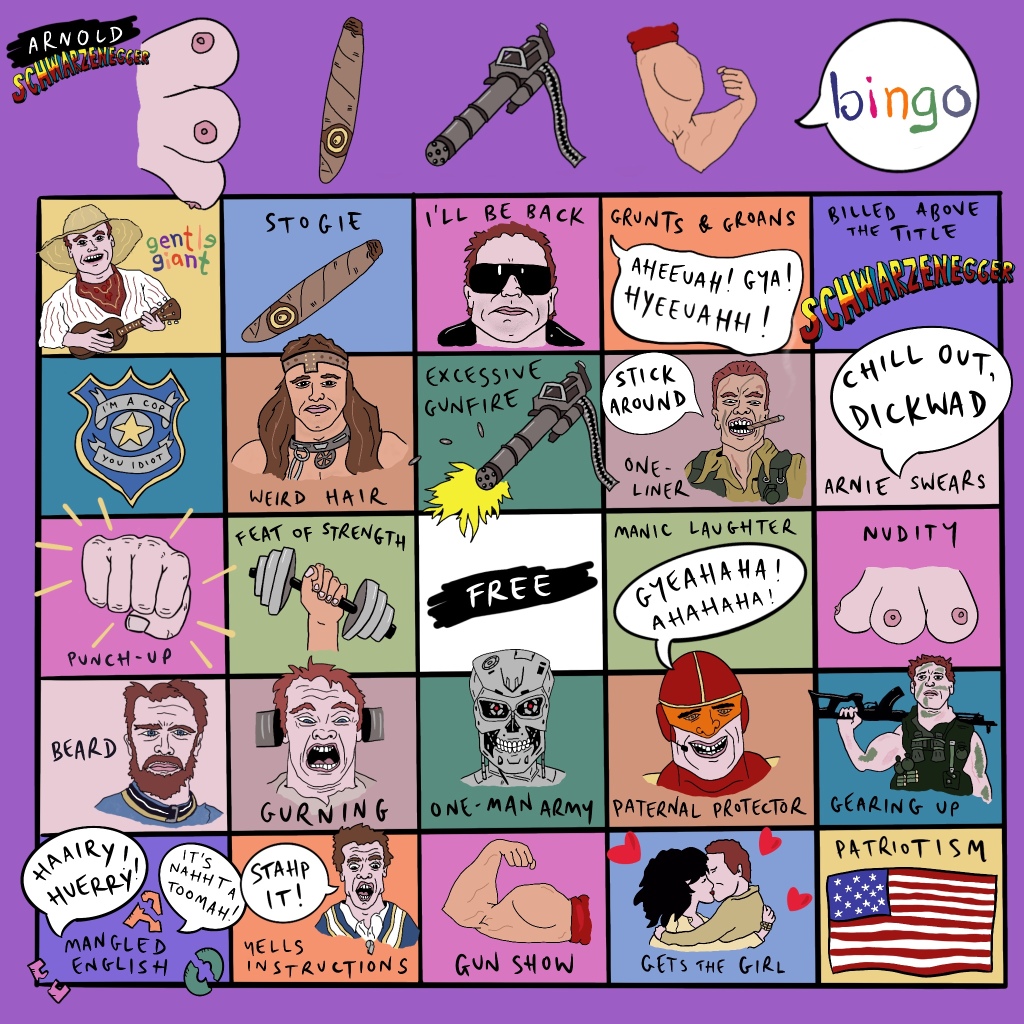
 Scarious Artists